Profitable revenue growth management helps service businesses grow profitably, protect margins, and improve pricing power.
Gross margin shows profit as a percent of revenue, while markup shows profit as a percent of cost; same numbers, different bases, different pricing results.
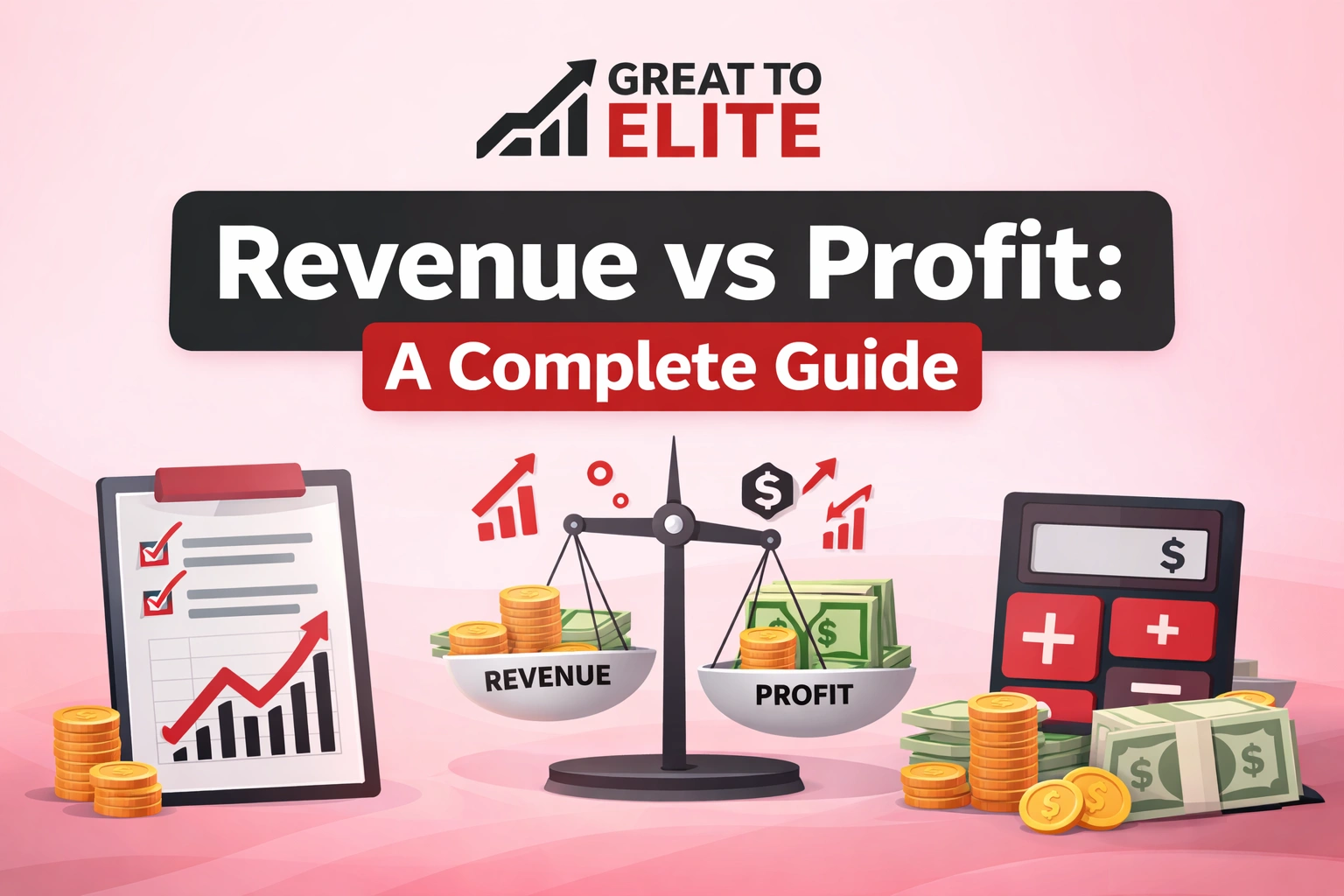
Revenue shows total sales before expenses, while profit is what remains after all costs, taxes, and interest, revealing whether a business truly makes money.
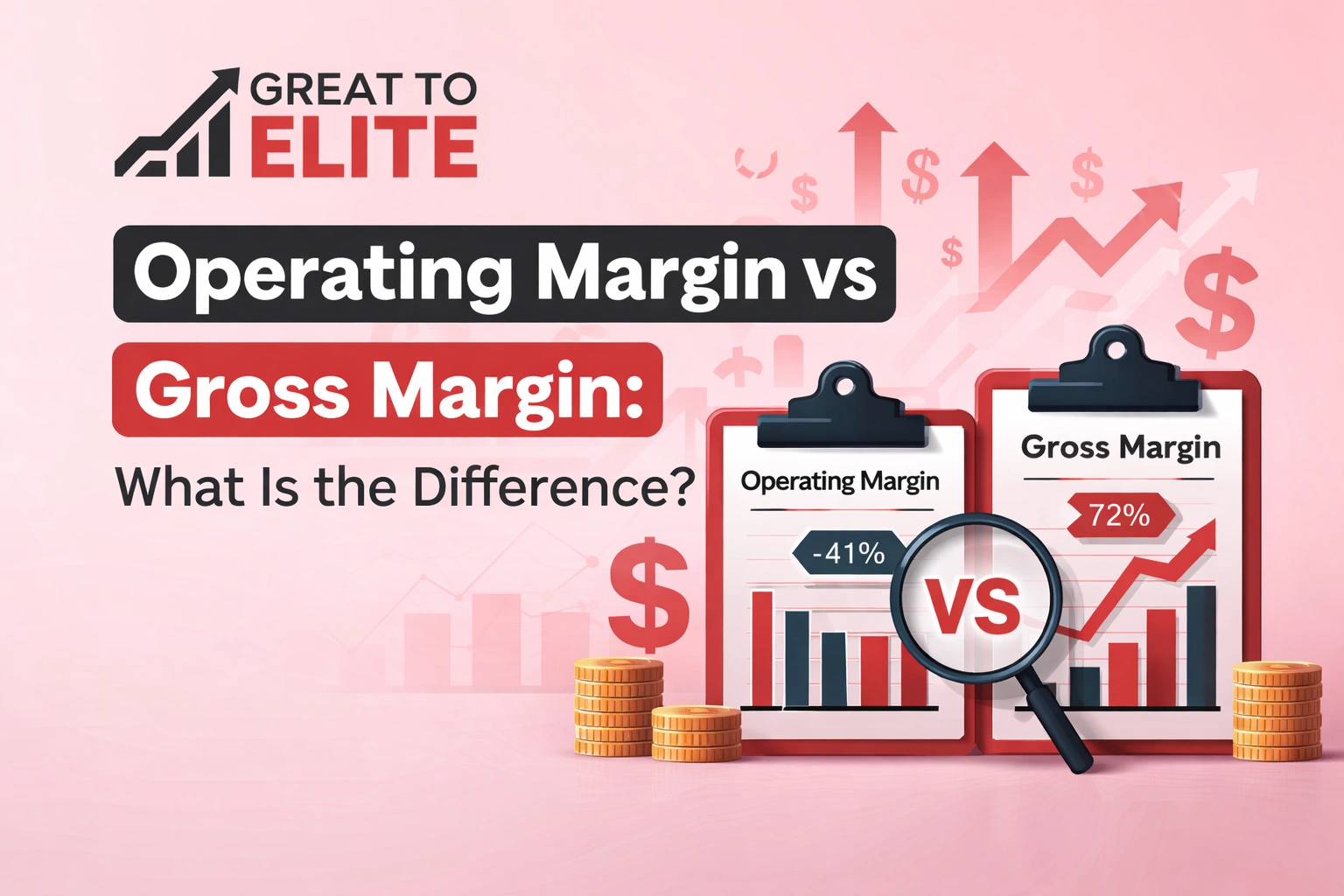
Gross margin shows profit after direct costs; operating margin shows profit after costs + overhead, before interest & taxes.
Enterprise value for a private company shows total acquisition cost, helping buyers with fundraising, partner deals, and exit planning.
Enterprise Value (EV) is the total cost to buy a company, including debt and claims, minus cash and equivalents.
To exit a business, plan backward from your ideal outcome and work forward through the practical steps that make that outcome real.
Enterprise value measures a company’s total worth. It combines market capitalization, debt, and cash.
Small business succession planning defines who owns and runs your company and how decisions are made when you step away.
Business ownership succession is the structured transfer of ownership, control, and decision-making authority from one owner to another.
Business exit planning services help owners prepare their company for sale, succession, recapitalization, or a smooth, gradual exit.
Family business succession planning consultants build practical plans that protect legacy, guide future leadership, and bring objectivity to sensitive decisions.
An exit strategy for a small business is a plan guiding ownership transition, sale, transfer, or wind-down, protecting value and stakeholders.
Business succession planning consultants prepare the right leaders to step into critical roles when change happens.
Business exit strategy planning is the process of creating a structured, goal-driven roadmap for transferring ownership of a business.
A business exit plan outlines how you intend to leave your business, whether through a sale, passing it down to family members, or closing it down.
To sell a business without a broker, evaluate it clearly, market it yourself, screen buyers, and negotiate directly to keep control and avoid commissions.
Business valuation for exit strategy is the disciplined process of determining what your company is worth today in the context of a future sale or transition.
A succession planning framework is a structured system to identify critical roles, assess talent, and prepare future leaders before key vacancies occur.
Succession planning is a structured, ongoing process that prepares people to step into critical roles so the business keeps running without disruption.
A succession plan prepares employees to step into key roles when current leaders retire, leave, or become unavailable, ensuring smooth business continuity.
Succession planning prepares future leaders, develops talent for critical roles, and keeps operations steady while reducing risks during leadership transitions.
Enterprise value shows total business worth, including debt and cash. Market cap shows equity value based on share price and shares outstanding.
Enterprise value totals operating claims (market cap + debt − cash). Equity value is what remains for shareholders, tied to share price and ownership.
Enterprise value shows a company’s total worth by adding market cap and debt, then subtracting cash.
Buying a turnkey business means stepping into an operation that’s already built, tested, and producing revenue.
Buying a landscaping business means verifying revenue, inspecting equipment, and ensuring customers and crews remain after the owner exits.
Buying a plumbing business starts with defining the type you want: service, construction, or mixed; that choice drives margins, stability, and lender appeal.
To buy an HVAC business, define criteria: service mix, territory, residential vs. commercial, and minimum recurring contracts.
Seller financing lets the seller act as the lender, lowering upfront cash needs and easing transition costs as you repay through monthly installments.
The steps to buying a business are: identify a target, value it, negotiate, submit an LOI, run due diligence, secure financing, and close the deal.
Cash flow when buying a business means knowing how much cash it truly generates after bills, how stable it is, and where early pressure points may hit.
Finding a business to buy starts with understanding where real deal flow comes from and how to separate noise from genuine opportunities.
Buying a business starts with a clear financing plan that shows what you can borrow, what lenders will approve, and how to structure a cash-safe deal.
To buy out a business partner, assess their stake by analyzing assets, liabilities, cash flow, IP, and growth, not just current profits.
Red flags when buying a company: messy books, odd sale stories, legal issues, key-client risk, high turnover, and lenders refusing financing.
Due diligence when buying a company means verifying financials, contracts, assets, inventory, and equipment, and getting audits to uncover hidden risks.
Buying a company means defining your target, screening fast, verifying details, structuring the deal, and planning the transition before closing.
Buying a company starts with asking the right questions: why the owner is selling, how dependent the business is on them, and whether the financials are real.
Buy a home services business by assessing cash flow, staff, customers, and terms so you secure a strong deal and a smooth, profitable transition.
To buy a company, evaluate targets, verify the numbers, and structure a deal that the business’s cash flow can support while protecting your downside.
You can buy a company with no money if you lean on financing, seller terms, and the target’s cash flow.
Buying a construction company involves assessing finances, contracts, workforce, equipment, reputation, and legal risks for a successful acquisition.
Profit margin shows what remains after all expenses to reveal overall financial health; gross margin shows revenue left after delivery costs.
Budgeting and forecasting mean setting a clear financial plan and predicting what’s likely to happen based on real data.
Fixed costs stay the same each month, while variable costs change with every job, like labor hours, materials, fees, and other service delivery expenses.
Profit per employee is a financial metric that shows how much net profit a company generates for every person on its payroll.
Financial benchmarking for service businesses compares your margins, utilization, revenue per employee, and costs against top peers and industry standards.
Margin improvement means widening the gap between service delivery costs and earnings, determining whether your trade or service business grows or struggles.
A profit forecast predicts your business’s future profits by analyzing expected revenue, costs, and operational trends over a set period.
Profit optimization means analyzing and improving every factor, pricing, costs, services, and operations, to increase margin and overall profitability.
A Cost-Value-Profit (CVP) Analysis shows trade businesses how costs, revenue, and profits interact to guide pricing and profit decisions.
Business process improvement techniques are systematic methods used to analyze, redesign, and enhance the way a business operates.
Cost efficiency means using labor, materials, equipment, and overhead wisely so every trade job maximizes results and protects profit margins.
Revenue leakage is income you’ve earned but didn’t collect due to pricing errors, missed services, billing delays, or inefficient processes.
Family Business Succession Planning is the process of preparing for the smooth transfer of ownership and leadership from one generation to the next.
Cash flow optimization ensures money flows in faster than it goes out, helping trade businesses stay liquid, cover costs, and grow sustainably.
Profitable growth means growing your business sustainably, boosting revenue, margins, and efficiency so every dollar adds real value.



.webp)





.webp)


.webp)

.webp)
.webp)
.webp)






.webp)
.webp)