The steps to buying a business are: follow a repeatable process: identify a target, determine value, negotiate terms, submit a letter of intent, complete due diligence, secure financing, and close with proper documentation. Typical diligence reviews at least three years of tax returns and current financial statements. LOIs often include an exclusivity period up to 90 days.
Expect clear timelines and key documents. Many deals mix debt and equity. Options include SBA loans, traditional bank loans, or retirement rollovers. Closings usually use escrow and formal purchase agreements reviewed by counsel.
This guide helps you evaluate fit, control risk, and manage the owner handoff so day one is stable. Great to Elite frames each decision around value and long-term growth for your company and protects the deal you create.
Key Takeaways
Use a repeatable process so you always know the next step and how choices affect ownership.
Due diligence confirms value, focus on financials, legal items, operations, and people.
LOIs typically include an exclusivity window; plan timelines around that period.
Financing can blend debt and equity; align capital with cash flow and goals.
Closing mechanics include escrow, formal agreements, and counsel review to reduce surprises.
Why Buying An Existing Business Can Be A Faster Path To Ownership
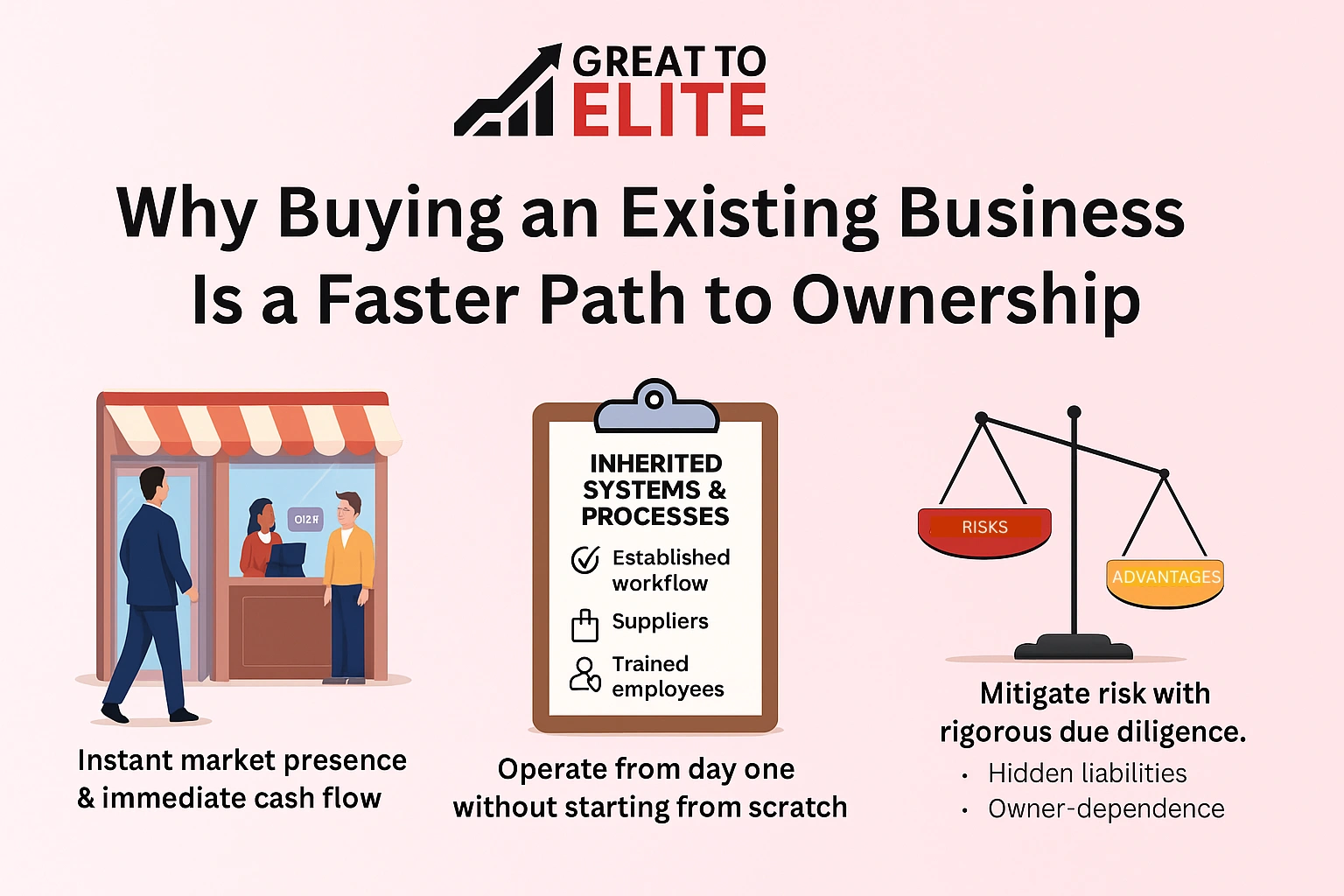
Stepping into an existing operation often gives you instant market presence. You inherit customers, trained staff, suppliers, and systems that start producing revenue right away. That head start cuts the time needed for trial and error.
Immediate cash flow lowers early uncertainty. Real revenue and historic records give you data for smarter choices instead of relying only on projections. In 2024 global M&A value hit about $2.6 trillion, and the U.S. drove more than half of that activity.
Established processes and supplier ties speed execution and preserve value.
Employees with institutional knowledge let you focus on growth rather than hiring from scratch.
Faster entry still carries risk: overpaying, hidden liabilities, or owner-dependent sales.
How to buy a company with focus: match the opportunity to your skills, budget, and timeline. Use thorough diligence to confirm value and durability before finalizing the deal.
Define Your Fit And Find Opportunities
Match what you do well with the types of companies you’ll consider. Clarify your skills, how hands-on you want to be, and the lifestyle you expect. This focus helps you shortlist businesses that fit your strengths and schedule.
Clarify Your Skills, Risk Tolerance, And Lifestyle Goals
Write down what you can run day-to-day versus what you’d delegate. Note your cash comfort level and timeline for returns. That makes it easier to judge industry fit and expected value creation.
Where To Source Deals: Brokers, Marketplaces, And Your Network
Search widely: online marketplaces, local brokers, CPAs, attorneys, franchise resales, and referrals from your network all surface different opportunities. Brokers can filter listings and help negotiate, so make sure their incentives align with yours.
Signals Of A Promising Target: Cash Flow, Customers, And Growth Potential
Look for steady or improving cash flow and clear paths to more revenue.
Prefer diversified customers, no single client should drive most sales.
Probe owner involvement; if the owner runs core work, plan a transition.
Signal
What It Shows
How You Act
Consistent cash flow
Operational strength and predictable returns
Model earnings and stress-test projections
Customer diversity
Lower concentration risk
Review top clients and contracts
Clear growth plan
Scalable opportunity in the industry
Estimate investment needs and payback
Owner-dependent operations
High transition risk
Negotiate training or earnouts for handoff
Evaluate Targets Before You Engage The Seller
Screening candidates early saves time and keeps your focus on viable deals. Before full engagement, set an initial checklist that filters opportunities fast. That checklist should flag simple disqualifiers so you don’t waste effort pursuing weak fits.
Understand Reasons For Sale And Owner Involvement
Ask why the sale is happening: retirement, health, or unresolved issues. Knowing motivation reveals what you may inherit and how long the owner will stay.
Confirm the owner’s role in daily operations. If one person runs core tasks, plan training or a phased handoff.
Early Red Flags To Watch For
Watch for the red flags when buying a business: inconsistent financial narratives, sudden drops in revenue, or heavy customer concentration. These often signal hidden liabilities or fragile demand.
Request high-level documents for quick screening: tax summaries, recent profit and loss, key contracts, and permits.
Speak with employees, customers, and neighbors when possible to verify claims about reputation and retention.
If you see signs of a rushed sale, pending litigation, or failing equipment, stop and reassess before advancing.
Screen Item
What It Reveals
Quick Action
Red Flag
Reason for sale
Motivation and transition support
Ask seller directly and note timeline
Vague or evasive answers
Financial snapshot
Revenue trends and expense anomalies
Compare last 12–36 months
Inconsistent statements
Customer mix
Concentration and retention risk
Review top clients and contracts
One client >40% revenue
Legal & assets
Possible liabilities and asset condition
Request key documents early
Pending suits or failing equipment
Steps To Buying A Business: From First Look To Closed Deal
Begin with a clear roadmap that maps every move from first look through closing. That roadmap keeps you strategic and helps you bring in advisors at the right moments.
High-Level Roadmap You’ll Follow
Identify target and run a preliminary valuation.
Negotiate headline terms and submit an LOI with an exclusivity window (often up to 90 days).
Perform due diligence, review at least three years of tax returns and core financials.
Secure financing (SBA, bank, seller finance), finalize purchase agreements, fund via escrow, and close.
Typical Timeline And Decision Points
Establish gates: initial valuation, offer range, LOI, diligence pass/fail, financing approval, and final agreements. Many deals stall during diligence when numbers don’t line up.
Keep communication clear with the seller to resolve issues quickly and preserve momentum. Build contingency time for lender underwriting, landlord consents, or third-party approvals.
Milestone
Purpose
Typical Duration
Key Owner
Preliminary valuation
Set realistic offer range
1–2 weeks
You and advisor
LOI and exclusivity
Lock negotiation window and outline terms
1–4 weeks
Buyer & seller
Due diligence
Confirm financials, legal, operations
30–90 days
Buyer, CPA, lawyer
Financing & close
Secure funds, finalize agreements, transfer ownership
2–8 weeks
Buyer, lender, escrow
Business Valuation Methods You Can Trust
A sound valuation turns past performance and future potential into a defendable price. Use methods that match how the target earns, owns, and competes so your offer rests on clear logic.
Income approaches: capitalized earnings and discounted cash flow
Start with earnings. Capitalized earnings works for stable profits; discounted cash flow fits growing or variable forecasts.
Translate normal owner-adjusted profit into a present-day value and stress-test growth assumptions.
Asset-based approach: tangible and intangible value minus liabilities
Use this when assets drive returns. Net tangible and intangible assets, less liabilities, often set the floor for price.
Market comparables: benchmarks and industry multiples
Look at recent sales of similar firms and apply multiples adjusted for size, margin, and local industry conditions.
Reconcile the three methods and weigh each by business model and risk profile.
Verify profit with clean statements and at least three years of tax filings before final modeling.
Adjust for customer concentration, owner reliance, team depth, and brand reputation.
Document each step so you can defend your price during negotiation.
Method
When Useful
Key Output
Income (Cap/D cf)
Stable or projected earnings
Present value of future cash
Asset-based
Asset-heavy operations
Net assets less liabilities
Market comparables
Active sale market
Benchmarked market price
Negotiating Price And Terms That Protect You
Protect value and define exactly what transfers and how you adjust the headline number. Start negotiations with clear structure: asset versus stock, and a workable purchase price framework. That helps you spot liability shifts and tax consequences early.
What’s Included: Assets, IP, Contracts, Inventory
List every asset, piece of IP, and assignable contract you expect to receive. Specify inventory counting methods and excluded items.
Adjustments, Earnouts, And Seller Support
Use working capital targets and inventory adjustments so the effective price at close matches expectations. Consider earnouts or seller notes to bridge valuation gaps while sharing downside risk.
Define inclusion schedules so the agreement mirrors your intent.
Clarify transition support: hours, duration, scope from the seller.
Negotiate reps & indemnities to address known and unknown liabilities.
Issue
Buyer Fix
Seller Option
Working capital
Target and true-up at close
Accept target or adjust price
Inventory
Count method and valuation
Agree on exclusions or buyback
Liabilities
Prefer asset sale to limit exposure
Offer limited reps or escrow holdback
Letter Of Intent (LOI) And Exclusivity
An LOI frames headline expectations so your teams can move quickly and with fewer surprises. Use this document to outline price, structure (asset or stock), timing, and key terms. Most LOIs grant an exclusivity window, often up to 90 days, so you can run focused diligence without competing offers.
Be explicit about which clauses are binding. Confidentiality, exclusivity, and access rights usually stick. Most economic items remain non-binding until you sign the final agreement.
Align the LOI with your financing plan and diligence scope. That keeps downstream documents consistent and reduces re-trading of core points.
Lock price, structure, and exclusivity so you can invest time in review with confidence.
Set timelines for information delivery, systems access, and third-party approvals.
Map a clear path for drafting the definitive agreement and assign responsibilities.
Clause
Purpose
Typical Duration
Buyer Action
Headline price & structure
Frame valuation and asset vs stock choice
Agreed in LOI; finalized at close
Confirm with advisor and lender
Exclusivity
Protect review period from competing bids
30–90 days
Use period for diligence milestones
Binding provisions
Confidentiality, exclusivity, access
Effective immediately on signing
Enforce confidentiality and request records
Timing & roadmap
Define deadlines and drafting responsibilities
Set clear turnaround times
Track milestones and escalate delays
Due Diligence Essentials You Should Not Skip
A thorough review can make or break your purchase, start with the right checklist. Rigorous due diligence often determines success; nearly half of acquisitions collapse during this phase when issues surface.
Financial Diligence: Tax Returns, Statements, And Cash Flow Trends
Request at least three years of tax returns, profit and loss, balance sheets, and cash flow reports. Reconcile tax filings with bank records and management statements to spot anomalies.
Legal And Contract Review: Leases, Litigation, And Assignability
Collect customer, supplier, and employment contracts, plus lease and property records. Confirm assignability and termination rights. Check for pending suits and contingent liabilities that may follow the deal.
Operations And People: Customers, Suppliers, Employees, And Systems
Validate AR/AP, vendor lists, equipment and inventory schedules, licenses, permits, and online sentiment. Look for customer concentration, owner dependence, and single-employee risk that can erode value post-close.
Risk Indicators That Commonly Break Deals
Red flags include missing or inconsistent financial records, unexplained revenue drops, undisclosed debt, or unwillingness to provide key documents. Document issues early and quantify impacts so you can reprice, add protections, or walk away.
Build a diligence plan that prioritizes documents and metrics that prove revenue quality and margin stability.
Review contracts for revenue triggers and assignability that change post-close economics.
Confirm liabilities such as payroll, sales tax exposure, and contingent obligations.
Financing Your Acquisition Without Derailing The Deal
Financing choices shape whether your deal closes on schedule or stalls under paperwork. Match funding to cash generation and your investment horizon so you can service payments without stretching working capital.
SBA Loans: Requirements, Timelines, And Fit
SBA-style loans often offer long terms and competitive rates but require detailed documentation and longer approval time. Plan application early and align lender milestones with diligence so closing time stays realistic.
Seller Financing: Structures And How It Pairs With Other Debt
Seller notes can bridge a price gap and keep your out-of-pocket lower. They also align incentives when the seller stays involved. Combine seller financing with bank or SBA debt when possible for balanced risk.
Bank Loans, Investors, And Friends & Family
Traditional lenders and private investors offer varied terms; friends can help but document agreements clearly. Each source affects control, repayment expectations, and future investor relations.
Using Retirement Funds And Personal Cash Responsibly
Retirement rollovers and personal cash reduce financing costs but preserve a cushion for tax and closing surprises. Keep reserves for operational needs after the transaction.
Coordinate lender deadlines with diligence and legal drafting to avoid last-minute delays.
Understand SBA paperwork so you can meet requirements early.
Document seller and friends arrangements to prevent future disputes.
Option
Typical Fit
Pros
Cons
SBA loan
Stable cash-flow companies
Low rates, long terms
Slow approval, heavy docs
Seller financing
Bridging valuation gaps
Lower upfront cash, aligned incentives
Seller risk retention
Bank / investor
Growth-focused targets
Flexible sizing, external oversight
Stronger covenants, possible dilution
Retirement / personal cash
Smaller deals or equity buy
No lender approval, faster close
Personal risk, tax consequences
Legal Structure, Agreements, And Closing Mechanics
Your chosen structure defines which liabilities you inherit and how the deal is taxed. Pick asset or stock transfer with clear expectations for tax, legacy exposure, and what moves with the company.
Asset Purchase Versus Stock Purchase: Tax And Liability Implications
Asset purchases often limit assumed liabilities and let you allocate purchase price among assets for tax benefit. They can require reassigning contracts and a lease transfer.
Stock purchases may be tax-favorable for the seller but can carry legacy obligations tied to the company. Match structure with lender and tax advice.
Critical Closing Documents And Compliance Items
Prepare these deliverables early so filings and consents finish before funding:
Bill of sale and IRS Form 8594 for asset allocation.
Non-compete, employment or consulting agreements, and IP assignments.
Assignments of contracts, lease consents, and permits.
Why Engaging A Lawyer And CPA Saves Time And Costly Mistakes
Engage counsel to review agreements, spot risky clauses, and coordinate escrow. A CPA will structure tax items and verify allocations.
Align closing checklists with lender and escrow requirements so funds transfer cleanly and you start day one with legal authority to operate.
Issue
Typical Document
Why It Matters
Action
Asset allocation
IRS Form 8594
Determines tax basis for assets
Prepare with CPA and include with closing package
Transfer of contracts
Assignment & consent
Ensures revenue continues post-close
Obtain counterparty consent before closing
Lease
Lease transfer or estoppel
Secures premises and prevents eviction
Coordinate landlord approval early
Seller obligations
Non-compete & consulting agreement
Protects goodwill and aids transition
Negotiate term, scope, and enforceability
Post-Close Transition Plan For Day-One Stability
Plan the first 30–90 days so operations stay steady and customers feel cared for. Start with an explicit, short day-one checklist that focuses on continuity, access, and clear communications.
Owner Handoff: Intros, Knowledge Transfer, And Systems Access
Schedule structured sessions with the owner for introductions, playbooks, and logins. Capture vendor contacts, SOPs, and recurring tasks in simple guides.
Hold short walkthroughs with key staff so each employee knows roles and immediate priorities.
Licenses, Permits, And Change Management With Staff And Customers
Confirm which licenses transfer and file for those that don’t. Notify regulators, landlords, and major customers early to avoid service interruptions.
Set a clear day-one plan that prioritizes continuity for customers and employees while you learn systems.
Schedule knowledge-transfer sessions and require written playbooks.
Coordinate filings for licenses and permits promptly.
Communicate early with staff and outline near-term priorities.
Pace change over time; safeguard service quality before altering pricing or process.
Track simple KPIs for the first 90 days to guide decisions.
Action
Timing
Owner
Intro calls with top clients
Day 1–7
You & seller
Systems and credential transfer
Day 1–14
You
License/permit filings
Day 1–30
Advisor / You
How Great to Elite Helps Businesses Buy And Scale The Right Company
A targeted approach shortens timelines and lowers deal risk, as it aligns criteria with real operational needs. Great to Elite works with you to find a purchase that fits your goals and cash flow targets.
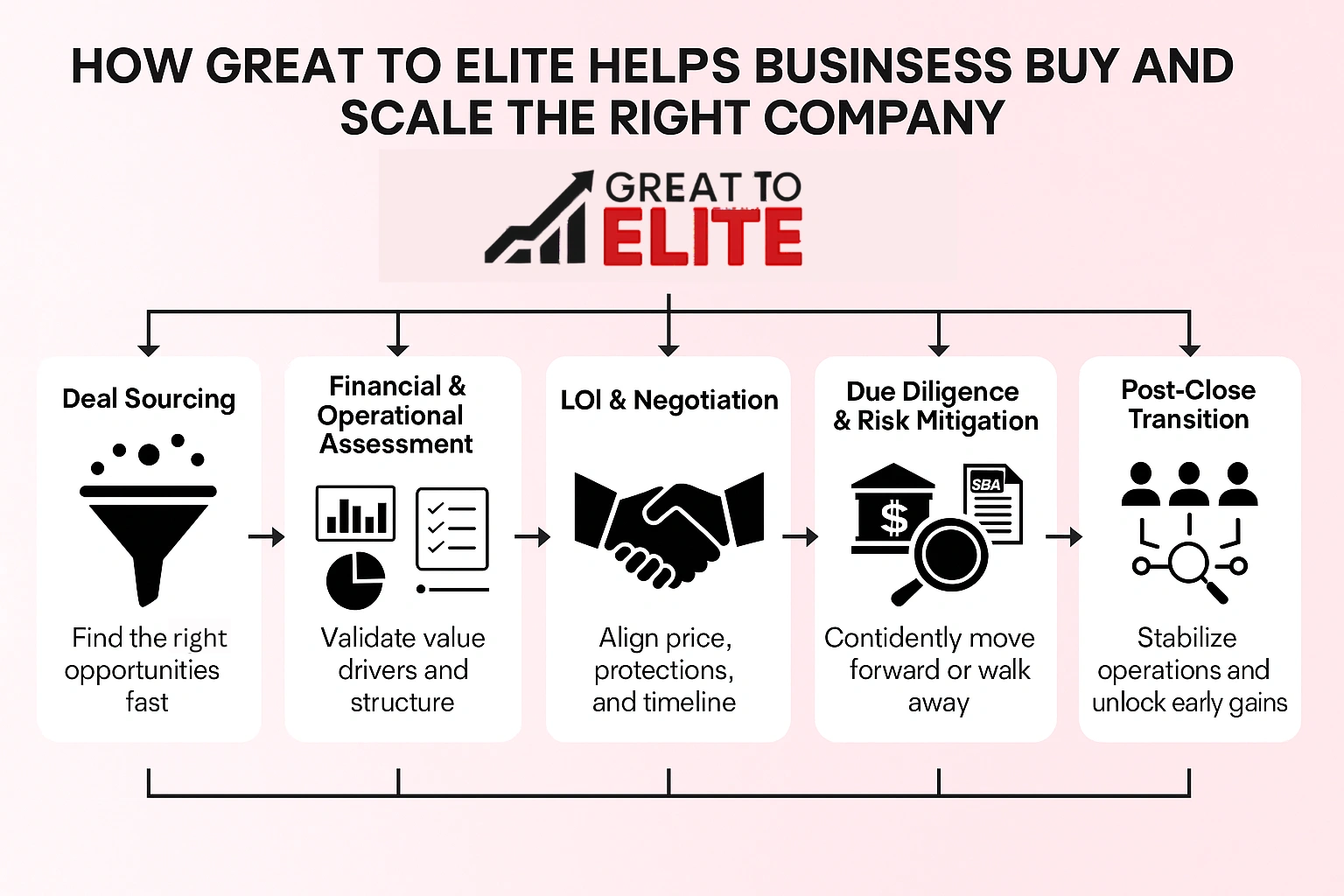
We provide an end-to-end playbook tailored for service owners. That playbook covers sourcing, valuation, negotiation, diligence, financing, and the first days after close.
Deal sourcing tuned to your needs, with fast filters that show only matching targets.
Financial and operational assessments that validate value drivers and shape an appropriate purchase structure.
LOI and negotiation guidance that aligns price, protections, and the transaction timeline.
Diligence checklists, modeling, and risk mitigation so you move forward confidently or walk away when warranted.
Financing coordination and lender-read reviews to keep your transaction on track through funding.
Transition planning for the first days to preserve customers, stabilize the team, and unlock early gains.
Ready to pursue an acquisition or plan your next purchase? Book a call with Great to Elite and get an actionable plan for your next move.
Conclusion
Disciplined valuation and clear paperwork keep value intact. Frame price using verified statements and years of records, then set terms in a concise LOI or letter intent so the team can focus on diligence.
Run financial, legal, and operational reviews. Check contracts, lease assignability, property risk, and liabilities. Use an experienced lawyer for structure and tax guidance.
Align financing with cash flow and close with precise documents. Favor asset allocation when you need liability protection or consider stock for seller tax reasons.
On day one, protect customers and key employees, keep continuity, and use seller support for 30–90 days. Great to Elite helps you move through the purchase into stable growth.
FAQs
What size of business is realistic for a first-time buyer to target?
›
First-time buyers typically succeed with firms generating $300K–$2M in annual revenue because financials are easier to verify, operations are simpler, and financing is more accessible. Larger companies involve heavier diligence, negotiation complexity, and higher working capital needs.
How long does it usually take to find a business worth making an offer on?
›
Most buyers spend 3–12 months sourcing, screening, and reviewing deals before finding one that fits their skills, price range, and cash flow criteria. Timelines vary based on industry, search intensity, and clarity of criteria.
Do I need industry experience to successfully buy and run a business?
›
Not always. Many buyers succeed in new industries when they target companies with strong teams, stable processes, and limited owner dependence. If the business requires specialized knowledge, plan for training, advisory support, or a transition period with the seller.
Should I hire a business broker or buy directly from the seller?
›
Both paths work. Brokers help organize documents and manage communication, while direct deals may offer better pricing but require more buyer-led diligence. Choose based on your confidence in negotiating, evaluating risk, and managing the process.
What are typical closing costs when buying a small business?
›
Legal fees, lender fees, diligence costs, and filing expenses generally total 3–10 percent of the purchase price. SBA loans, escrow services, and lease transfers can add additional administrative costs.
How do I evaluate whether the staff will stay after the sale?
›
Review employee tenure, compensation, culture, and any key-person dependencies. During diligence, request anonymized role information and use transition agreements or stay bonuses to retain critical personnel.
What happens if the seller wants to stay involved after closing?
›
Many deals include consulting agreements or part-time roles for the seller during a defined period. Set boundaries for hours, responsibilities, compensation, and decision-making to prevent overlap or confusion for the team.
How do I know whether the business can support acquisition debt?
›
Model cash flow with conservative assumptions, including seasonality and margin pressure. Lenders typically expect sufficient debt-service coverage (often 1.25x or higher). Stress-testing projections reveals if the deal can carry financing without straining working capital.
What if issues appear late in due diligence, can I still renegotiate?
›
Yes. Material findings allow buyers to adjust price, request seller financing, add escrow holdbacks, or walk away. Document evidence and quantify financial impact so renegotiation remains grounded and credible.
How soon after buying a business can I start making major improvements?
›
Start with stability first. Most buyers wait 60–120 days before implementing major changes so they understand systems, staff capabilities, and customer expectations. Early, aggressive changes can disrupt revenue and morale.