Succession Planning Best Practices
Succession Planning Best Practices

December 13, 2025



Succession planning is a structured, ongoing process that prepares people to step into critical roles so the business keeps running without disruption. A succession plan in business identifies key positions, assesses internal talent, and develops successors long before a transition happens. Companies that neglect this work face costly gaps, stalled operations, and risk losing hard-won knowledge when leaders leave.
Effective succession planning is a disciplined system that aligns role requirements, development, and readiness with your long-term strategy. This guide shows the best practices that keep your organization stable during change, build leadership depth at every level, and ensure key work continues smoothly no matter who moves on.
When a leader departs, a defined roadmap limits disruption and keeps teams productive. Your organization needs a clear, ongoing approach that prepares people for mission‑critical roles at every level. In a survey by Deloitte, 86% of leaders said succession planning is an “urgent” or “important” priority, yet only 14% believed their organisations are doing it well.
Succession planning is an organization‑wide process to identify key roles, assess internal candidates, and build targeted development. This approach keeps operations running and spreads leadership readiness beyond the executive layer.
Poorly handled leadership change can erase massive market value. Research shows many CEOs exit with little notice, creating costly gaps.
A documented plan with clear criteria and milestones enables timely, objective decisions and reduces risk to performance and growth.
Demographic trends and tight labor markets make experienced people scarce for many companies. You lower hiring risk when you build an internal bench and transfer tacit knowledge through mentoring and structured handoffs.
.webp)
Start building leadership depth now so your organization can adapt without disruption. Effective programs begin early and run continuously. Quarterly or biannual reviews keep candidate readiness aligned with the succession planning strategy and market shifts.
Create a regular rhythm for review and development. Use simple milestones so managers know when to act and how to measure progress.
Keep a written plan that names owners, sets milestones, and records readiness levels. This reduces ambiguity when decisions must be made under time pressure.
Ask senior leaders to sponsor the effort and mentor high‑potential people. Visible involvement signals that the work matters to the entire organization.
Map development to strategic priorities so training and stretch assignments build the skills your company will need for growth.
Knowing which positions drive revenue and operations helps you focus limited resources. List mission‑critical roles and mapping how each affects revenue, compliance, operations, and customer outcomes.
Create competency models for each key role that spell out the knowledge, skills, and behaviors tied to strong performance. Include both technical abilities and leadership capabilities so assessments remain consistent and objective.
Set clear proficiency levels and update models as market trends and technology shift. That keeps development relevant and aligned to future business needs.
Build a depth chart that lists primary and secondary successors for each role. Label readiness, such as “ready now” or “ready in 12–24 months”, and attach timelines for development.
Share concise summaries with stakeholders to demonstrate your pipeline can support transitions without disrupting the organization. Tie this work to your broader succession planning plan so it stays active and measurable.
Assessing who can lead next starts with clear, frequent reviews that tie performance to potential. Use straightforward tools so decisions stay objective and actionable.
Run recurring talent reviews using the 9‑box grid to calibrate performance and potential. This makes assessments fair, comparable, and actionable.
Review results feed individual development plans and update readiness labels like "ready now" or "ready in 12–24 months."
Favor cross‑functional rotations, stretch projects, and acting roles. These assignments build real experience and confidence for future leaders.
Align training to gaps identified in reviews and combine learning with practical work to improve performance quickly.
Set up structured mentoring and coaching to transfer tacit knowledge and shorten ramp‑up time. Pair mentors to match role needs and growth areas.
Widen slates, use diverse selection panels, and monitor outcomes. Inclusive pipelines broaden the pool and strengthen retention.
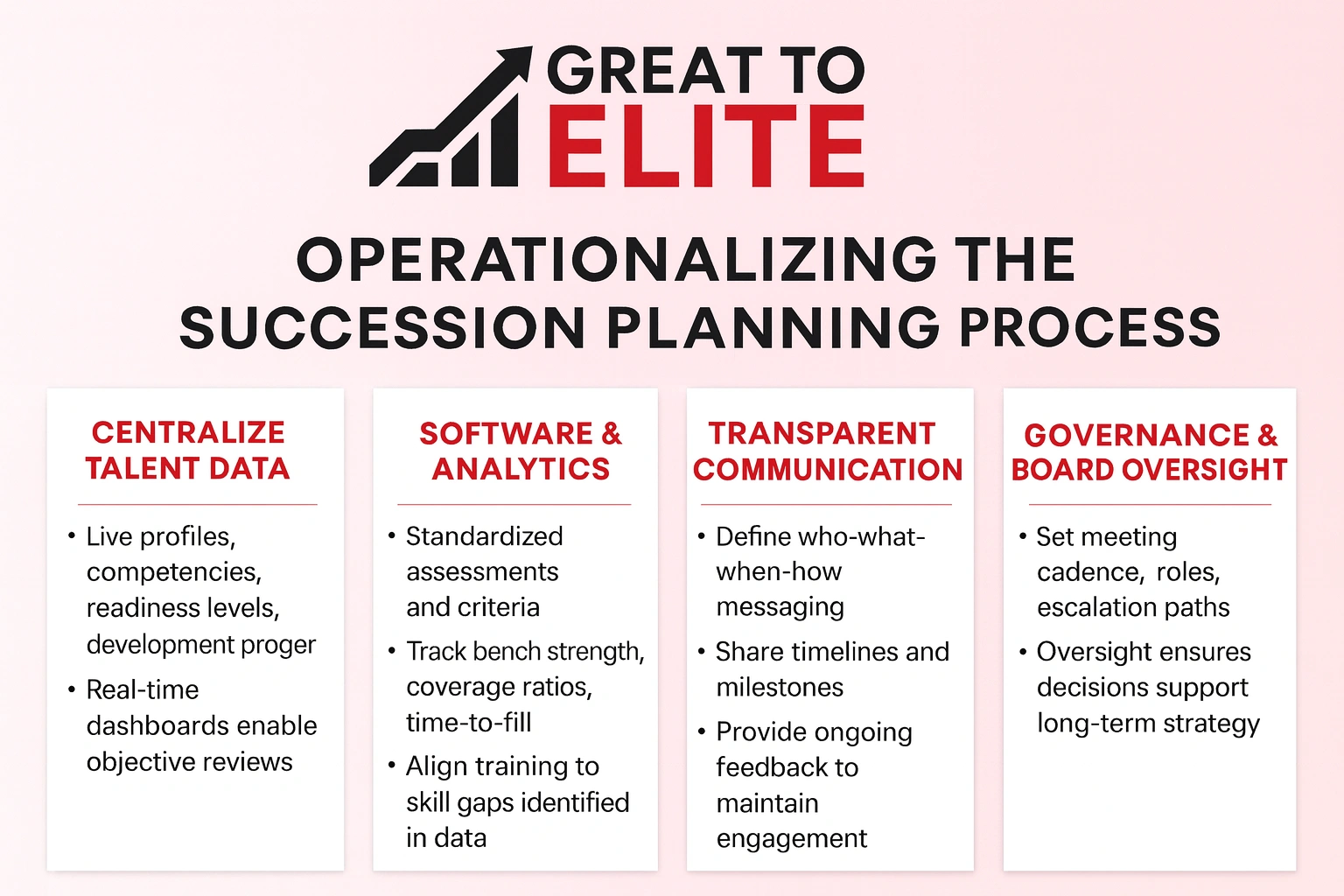
Centralize talent information so decisions use current facts, not memory or guesswork. Technology lets you keep profiles, competencies, readiness, and development progress in one place. Real‑time dashboards make reviews faster and more objective.
Use software to standardize assessments, role criteria, and decision checkpoints. That makes the planning process auditable and repeatable.
Design who‑what‑when‑how messages for reviews, launches, and changes. Share timelines and milestones to manage expectations. Give participants regular feedback so engagement stays high.
Define governance: meeting cadences, roles, and escalation paths. Add oversight to confirm decisions tie to long‑term strategy and that transitions protect customers and company performance.
Prepare clear interim coverage so critical work continues without pause during unexpected exits. Emergency readiness trims downtime and keeps customers and teams steady.
Name interim leads for each critical role and document decision rights, first‑week actions, and 30‑day priorities. Rehearse these steps with tabletop exercises so people know what to do under pressure.
Cross‑train potential interim leaders so they have context, system access, and the judgement needed to act on short notice.
Monitor market signals and adjust development so your successors build the capabilities the future demands. Stress test your approach with scenario drills and post‑mortems after real moves.
Formalize handoffs with artifacts, stakeholder maps, calendars, and risk logs. Clear expectations and success metrics speed ramp‑up and reduce repeated mistakes.
Great to Elite helps your service firm build clear role ownership so handoffs never stall operations. We create a tailored approach that links role maps, competency models, and depth charts to your services and client needs.
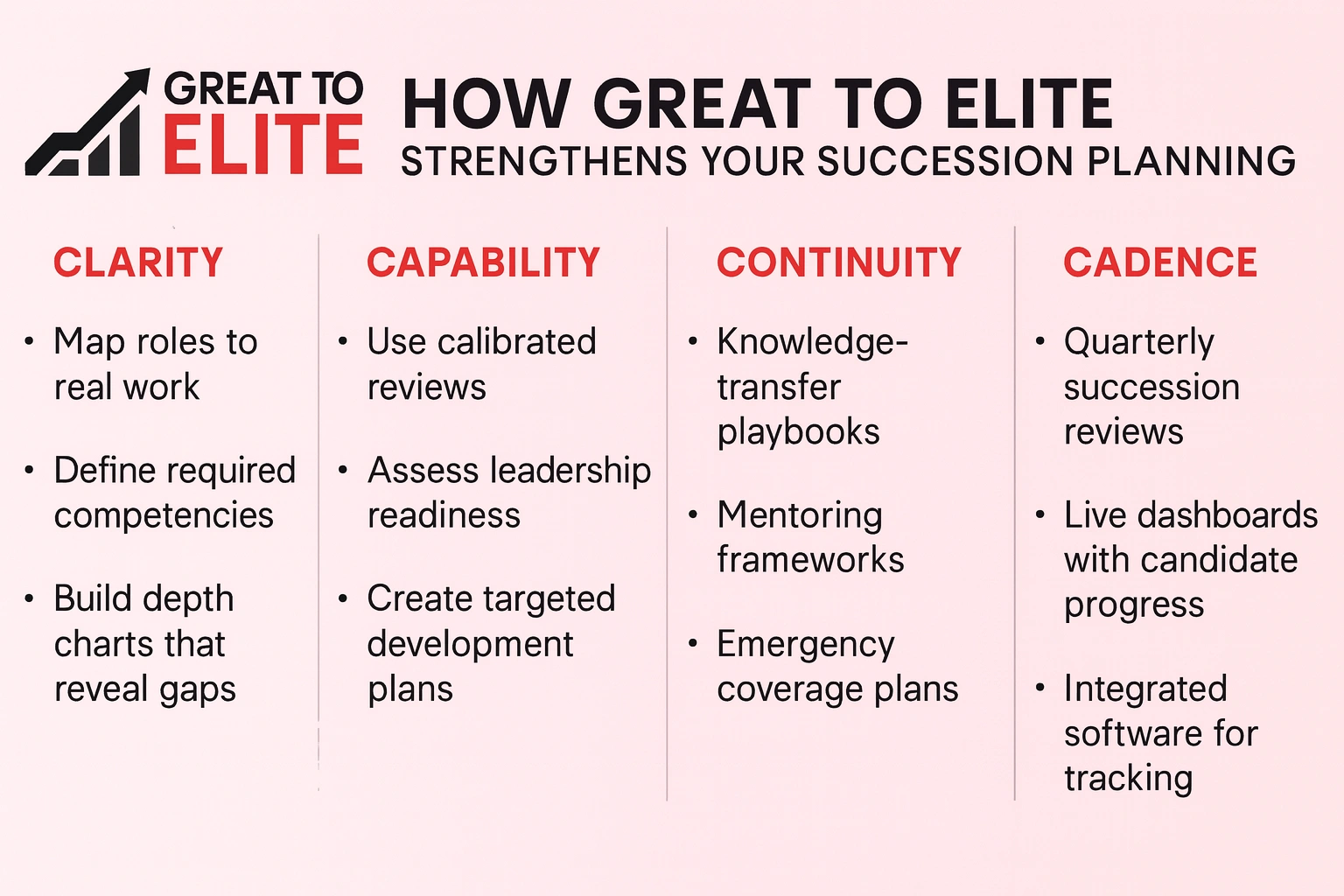
We map roles to real work and define the skills that matter. That makes it easier to identify potential and set measurable development goals.
Use calibrated assessment tools and regular talent reviews to rank candidates and create focused development and training plans.
Our mentoring frameworks and handoff playbooks preserve institutional knowledge and ensure interim coverage when leaders change.
We implement dashboards and a quarterly review rhythm so your planning process stays current and decision‑ready.
Align your plan to growth, culture, and client delivery. Book a call with Great to Elite to design your succession planning process and customize implementation for your company.
Preparing people and processes ahead of change makes transitions predictable and manageable.
Treat succession planning as a continuous business discipline. That approach secures continuity, lowers risk, and protects performance during any transition.
Early preparation, formal plans, and visible leadership involvement build confidence across your teams. Use structured handoffs, mentoring, and on‑the‑job development to preserve knowledge and speed ramp‑up.
Rely on objective data and clear communication so management decisions stay fair and candidates know next steps. This keeps your company ready for growth and positions you for long‑term success in the future.