How to Find a Business to Buy
How to Find a Business to Buy

Natalie Luneva
December 5, 2025
.webp)



Finding a business to buy starts with understanding where real deal flow comes from and how to separate noise from genuine opportunities. Most buyers begin with listing sites and broker channels, but the best acquisitions often emerge from quiet conversations inside trusted networks. In fact, 9,546 small business deals closed in 2024, totaling $7.59 billion, showing that many opportunities are available for buyers who are prepared. Once you know how to tap into those sources, the process becomes far more intentional.
To find a business to buy, define your criteria early, activate your relationships, and build a weekly sourcing system that keeps quality leads moving toward meaningful conversations. Set filters for industry, cash flow, and operational fit so you can triage opportunities quickly. Combine online marketplaces, selective broker partnerships, and private referrals, then evaluate each lead with a scorecard that highlights demand durability, margins, and cash conversion.
Set your acquisition intent up front so every lead serves a goal. Clarity reduces wasted time and keeps your search disciplined. Decide whether you want a franchise, an independent firm, or an online model before outreach.
Define your primary why: pick market entry, geographic growth, roll-up, or capability gain. This single decision guides valuation expectations and which companies you will pursue.
Translate strategy into operating criteria that reflect the industry you know and the size you can run. Choose whether you target a stable platform or a fixer-upper; each option changes the operational load and the deal timeline.
Finally, list what you bring, speed, certainty, or cultural fit, to improve seller conversations and raise the odds of success.
Begin with clear filters that turn broad deal flow into targeted options. This saves time and keeps screening objective. Define the market footprint you will pursue and the operational model you can run day one.
Decide whether you want local or regional reach and which industry segments fit your skill set, manufacturing, distribution, retail, consulting, or online models. Limit the radius and company size so your outreach stays focused.
Set revenue bands, normalized cash flow thresholds, and a realistic purchase price range. Estimate integration and financing costs up front so total cost does not surprise you later.
List must-have operational elements: a stable team, transferable systems, and a loyal customer base. Check staff skills, brand reputation, regulatory records, and seller motivation before deeper diligence.
Activate trusted relationships that surface silent sale conversations before they hit public listings. Leaders often confide in family, advisors, or accountants long before they advertise.
Tell former colleagues, mentors, and industry contacts what type of existing business you want. Give a clear, concise description so owners and referrers connect you with relevant opportunities.
Speak with lawyers and CPAs; they hear about potential deals early. Meet entrepreneurs who have bought; their lessons save time and prevent common missteps.
Engage reputable brokers selectively. Share your criteria and give prompt feedback so they send aligned deals. Use one or two trusted intermediaries rather than dozens.
Set saved searches and email alerts on marketplaces to stay top of new sales. Review inbound leads on a weekly step cadence and document next actions for each contact.

Digital marketplaces and firm websites now host most active listings. Use saved searches, filters, and alerts so you stay top of new postings without wasting time.
Large listing sites founded in the 1990s host tens of thousands of companies and offer optional premium buyer features. These may include valuation reports, demographic data, and featured buyer status.
Tip: Set specific filters, industry, location, revenue, and cash flow, and enable email alerts. That keeps your queue current and manageable.
Many brokers post on multiple marketplaces and on their own sites. Subscribe to firm lists for direct alerts on relevant listings before broad circulation.
Tip: Track which brokers consistently send quality information and prioritize their feeds.
A short, disciplined triage will keep your pipeline focused on opportunities worth due diligence. Apply compact checks that reveal whether a company warrants deeper attention before you request sensitive information.
Start with three practical filters: demand durability, competitive intensity, and clear differentiation you can explain to owners and teams.
Quickly score market trends, repeat customer rates, and whether the offering resists substitution. If demand looks thin or competition is relentless, pass fast.
Verify brand strength with reviews, complaint databases, and regulator searches. A short reputation scan prevents wasted time on firms with unresolved compliance risk.
Assess leadership depth and check tenure on professional networks and evidence of cross-training. High key-person dependency raises post-close failure risk.
Scan for tech exposure and intellectual property ownership. Note innovation history and competitor moves that could erode margins or cash flow.
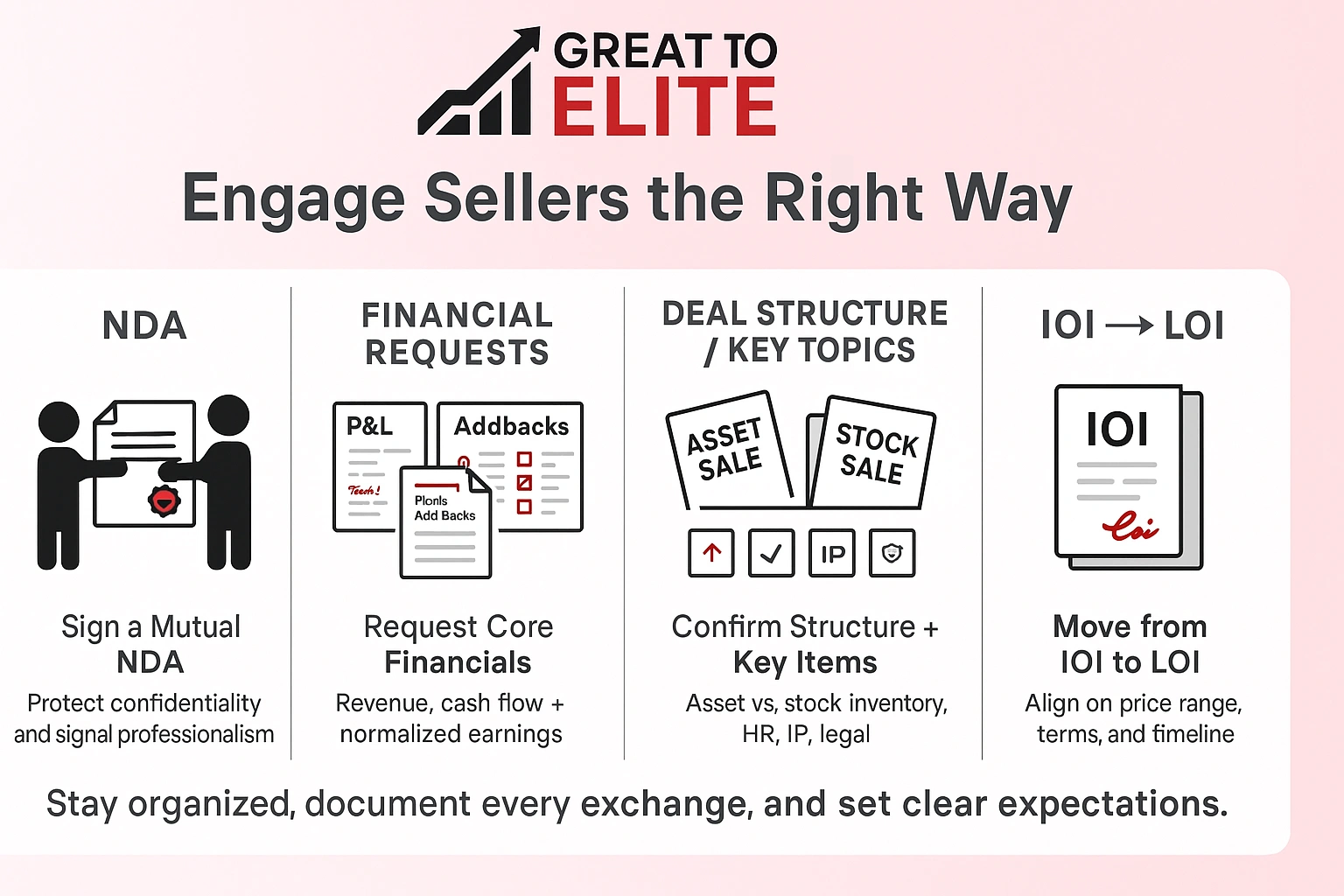
Lead with professionalism: sign a mutual confidentiality agreement before sharing sensitive materials. This protects both sides and signals seriousness, which helps brokers and sellers respond faster.
Request core financials early: revenue, cash flow, and normalized earnings with a short add-back list. Keep requests concise so the seller sees respect for time and can respond quickly.
Ask for recent P&Ls, balance sheets, and a reconciliation showing normalized earnings. Use this to compare the company against your purchase criteria.
Confirm sale structure (asset or stock), inventory methods, HR items, IP ownership, and any open tax or litigation items. Cover transition timing and key staff retention plans.
Send a brief Indication of Interest that states a price range, structure ideas, and main assumptions. Move forward to an LOI only after alignment on these points and an agreed timeline with any exclusivity terms.
Map the capital stack early so financing aligns with the company’s cash flow and risk profile. That clarity guides lender conversations and sets realistic expectations for sellers and brokers.
Evaluate conventional bank debt, the portion the seller will finance, and mezzanine capital as gap funding. Consider which assets support a loan and budget working capital needs up front.
Align purchase price, working capital, and earnouts so you balance seller certainty with protection if performance slips. For service firms, prioritize retention bonuses, customer transition plans, and clear training agreements.
Define diligence milestones, document requests, and sensitivity tests that show the deal can service financing under conservative scenarios. Plan integration with your team before closing so day-one operations are ready.
You gain leverage when expert advisors coordinate strategy, finance, and diligence. Great to Elite helps buyers move forward with clarity and fewer surprises.
Many buyers benefit from outside support to avoid costly mistakes and keep costs manageable. Our small team works with you across planning, modeling, due diligence, and integration so performance stays protected after close.

Ready to move forward? Book a call with Great to Elite to discuss your search, refine criteria, and plan next steps toward the right small business acquisition.
Bring structure to outreach, diligence, and negotiation so progress stays measurable.
Use clear criteria, staged NDAs, and concise information requests as your baseline. Source options from online listings, broker channels, and private networks, then screen with short scorecards that focus on cash flow and customer risk.
Align purchase structure, financing, and transition plans so day-one operations and the team remain protected. Maintain a steady cadence for monitoring websites and brokers, and document next steps to preserve momentum with sellers.
When you want to accelerate, partner with Great to Elite for strategy, deal support, and integration planning that raises the odds of a smooth sale and successful acquisition.