How to Exit a Business
How to Exit a Business

Natalie Luneva
December 25, 2025




To exit a business, plan backward from your ideal outcome and work forward through the practical steps that make that outcome real. Too many owners delay preparation until market pressure, personal events, or financial stress forces a decision, but data shows the risk of doing nothing is high: about 79% of small business owners have no business exit plan at all, leaving them unprepared when it’s time to sell or transition.
Effective business exit strategy planning begins with defining clear personal and business goals, then structuring your company so it can thrive without you. That means separating your personal finances from the business, tightening financial reporting, and building leadership depth long before the moment you intend to leave. From there you map out timelines, protect and increase value, and prepare for either selling or closing in a way that maximizes your return and minimizes surprises.
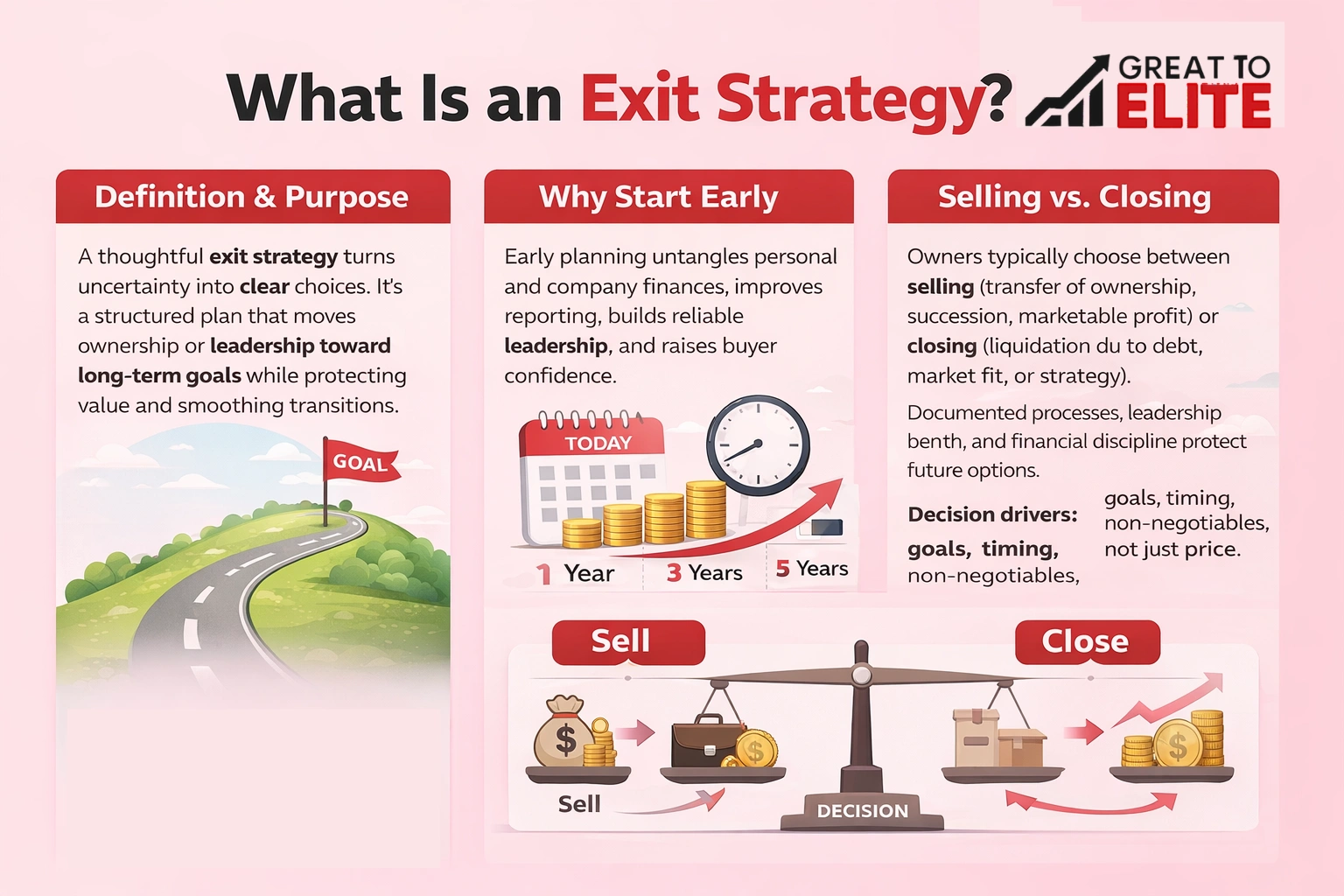
A thoughtful plan turns an uncertain future into clear choices. An exit strategy is a structured plan that moves ownership or leadership toward long-term goals while protecting value and smoothing transitions.
Owner finances often mix with company funds. Untangling those ties quickly is costly and messy. Early planning gives time to separate personal and corporate accounts, improve reporting, and build reliable leadership.
Starting years ahead makes decisions less rushed. It raises buyer confidence and creates clearer goals for stakeholders.
At a high level, owners usually choose between selling and closing. Selling aims for transfer of ownership, often driven by profit goals, marketability, or family and employee succession. Closing (liquidation) happens when debt, poor market fit, or strategic decisions make winding down the practical route.
Setting concrete priorities today keeps options open when major change arrives. List personal goals and company priorities. Clear targets shape what matters most during transition and protect value.
Clarify retirement needs, next venture plans, and risk tolerance. Decide what "enough" looks like after taxes and fees.
Consider cash needs and whether you will remain involved. Choose between a clean break or advisory role, and set realistic timing for stepping away.
Define non‑negotiables beyond price: protect culture, treat employees fairly, and keep customer relationships intact. Maintain strict confidentiality where needed.
Family dynamics may complicate internal transfers. Clear roles and expectations reduce conflict and speed decisions.
Allow at least six to twelve months for a sale. That time lets you clean financial records, fix operational gaps, and complete pre‑sale diligence: operational, human capital, commercial, financial, and tax.
Market changes can shift valuation and buyer interest. A firm strategy and readiness help you act when conditions improve.
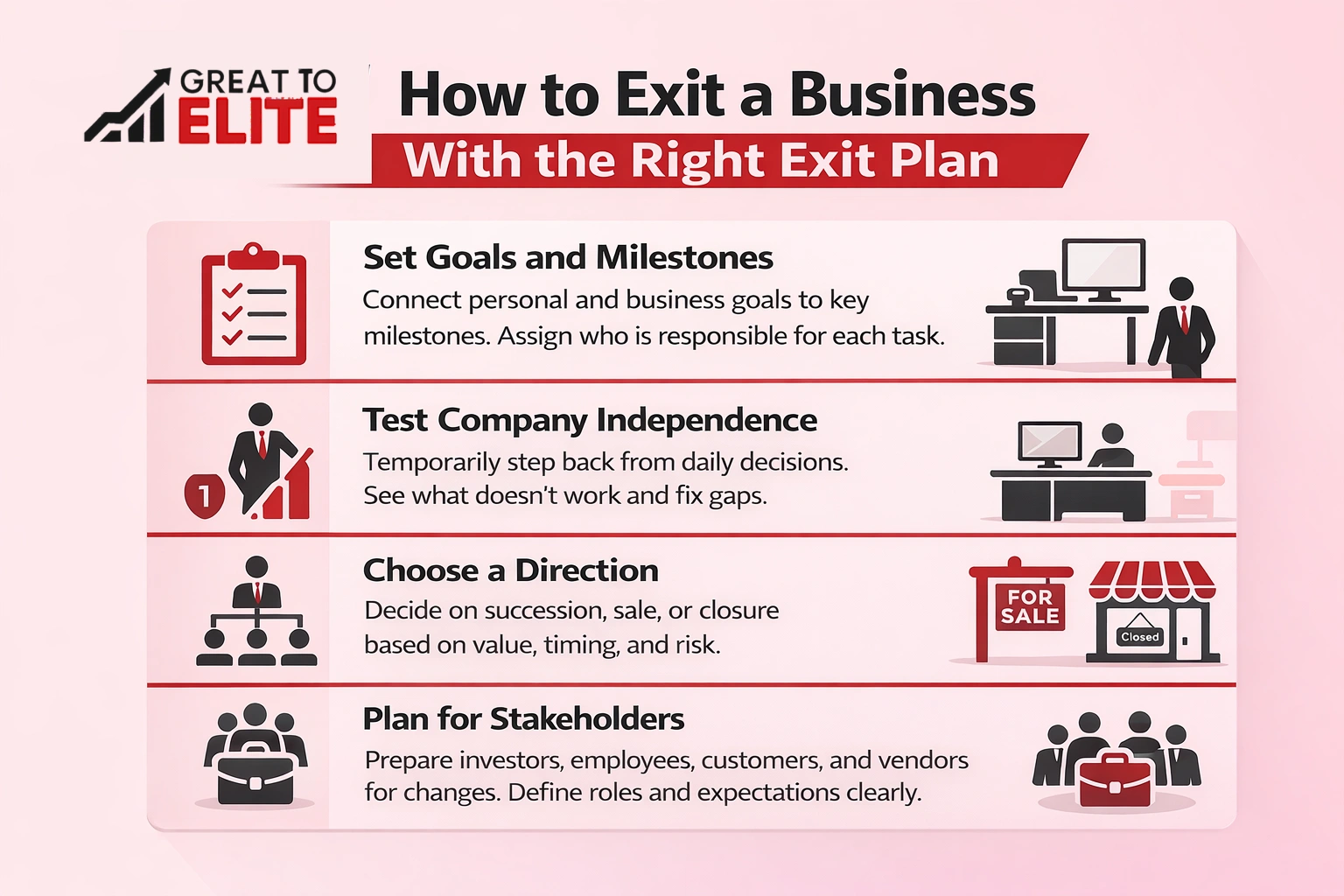
Build an exit plan that links goals from Section 3 to practical milestones. List roles, timelines, and who owns each task. Make responsibilities visible and accountable.
Map delegation and decision rights. Remove the owner from day-to-day approvals for a trial period. Track what fails and fix gaps in operations.
Use a simple decision matrix that weighs value, timing, risk, and stakeholder impact. Score each route and pick the path that matches goals and reality.
An early appraisal prevents surprise and frames realistic options for owners. Business valuation for exit strategy should start when you build the exit plan. That gives time to close gaps and align personal goals with likely proceeds.
Think in ranges (for example, $2.2M–$2.8M) rather than one precise figure. Buyer type can move a value point up or down. Strategic buyers, financial buyers, and internal buyers each prize different traits.
Select an appraiser who works on mergers acquisitions and has sold comparable companies. Ask clear questions about deal count, percent of practice in M&A, methods used, and the final deliverable.
Buyers focus on quality of earnings, customer concentration, recurring revenue, margin sustainability, management depth, and documentation. Common methods include market comps, discounted cash flow, and asset approaches.
A verbal opinion can speed planning but has limits in disputes or multi-owner alignment. A written report supports lenders, advisors, and buyers and defends assumptions under scrutiny.
Connect valuation results to personal plans. If projected proceeds fall short, identify specific changes, higher margins, recurring revenue, or stronger management, that raise company worth and close the gap.
Protecting value begins with fixing avoidable legal, tax, and insurance gaps. Separate preservation work from growth efforts. Preserve first so later opportunities compound rather than vanish under risk.
Run a legal audit to spot contract exposure and pending claims. Right-size insurance coverage for catastrophic events. Perform tax planning that closes preventable leakage before any transfer.
Diversify top clients and add supplier redundancy. Cross-train key staff and formalize retention incentives for critical employees. That lowers valuation discounts tied to single‑point dependencies.
Lock revenue with clear contract terms, renewal processes, and customer success rhythms. Repeat clients and steady subscriptions raise perceived value and buyer confidence.
Create SOPs, maintain CRM hygiene, and publish KPI dashboards. Define roles and close processes so leadership can run without owner intervention.
Focus on sustainable EBITDA gains rather than short-term sales spikes. Demonstrable profit improvement typically multiplies value when buyers verify durability.
Build succession plans, offer leadership incentives, and run a trial where the team manages daily operations. Prove the company can thrive without the owner present.
Different routes suit different priorities, value maximization, continuity, or urgent wind‑down. Categorize your options into outside, inside, and involuntary pathways so you can compare tradeoffs clearly.
Outside buyers often pay the most when synergies or scale matter. Strategic buyers and competitors may offer higher prices for market share or capabilities.
Private equity and financial buyers value predictable cash flow and governance. Expect deeper diligence and possible cultural change after closing.
Transfers to family or key employees preserve culture and continuity. These options may fetch lower market value but maintain relationships.
Seller financing spreads payments over time. It helps internal buyers afford the purchase and gives the seller income continuity. Evaluate credit risk, security, and contingency clauses before agreeing.
Plan for unexpected events with clear succession, insurance, and buy‑sell rules. That reduces disruption and preserves value for owners and stakeholders.

Good housekeeping before a transfer cuts risk and preserves value. Start with clear records, separated owner affairs, and legal cleanup. Allow 6–12 months for readiness and run pre-sale diligence across operations, people, commercial, financial, and tax workstreams.
Clean financial statements, normalize expenses, and document add-backs. Remove owner lifestyle costs from company records. Resolve contract and IP gaps to avoid retrades during negotiation.
Operational checks, human capital reviews, commercial validation, quality of earnings, and tax review reduce buyer risk. Completing these tasks early raises confidence and speeds offers.
Give investors, employees, and customers a measured plan that protects confidentiality while signaling stability. Watch industry cycles, interest rates, and buyer appetite so you can act when the market shifts.
Choose gradual or fast liquidation. Follow creditor priorities, file dissolution, cancel registrations and licenses, ensure wage-law compliance, file final tax returns, and retain records for 3–7 years.
Great to Elite guides owners from daily ops toward a clear, sellable future. Our approach blends practical steps and accountability so owners gain clarity, protect value, and prepare for transfer or succession.
We act as a practical partner that turns goals into an actionable roadmap. Engagements focus on sequencing valuation work, preserving and increasing value, and preparing the company for buyers or internal transfer.
Key steps we follow:

Start with a short call and we will outline an exit plan tailored for your company and goals. Book a call with Great to Elite to create a roadmap that raises valuation, reduces risk, and gives owners confidence when market windows open.
Successful transitions begin with small, consistent steps that protect value over years.
Summarize the arc: define an exit strategy, set clear goals and non‑negotiables, build a plan, value the company realistically, protect and increase value, choose among options, and prepare for diligence and transition.
Early planning is the best way to protect business value and expand options, rather than facing a rushed sale or closure. Owners should think in timelines: months for transaction readiness, years for value building and redundancy. Revisit goals as life and market conditions change.
Remember valuation is a range; outcomes hinge on buyer type, readiness, risk profile, and quality of financial and operational records. Treat exit planning as part of running the business so the future is smoother for owners, teams, and customers.