How to Buy Out a Business Partner
How to Buy Out a Business Partner

Natalie Luneva
December 5, 2025




To buy out a business partner, determine the value of their ownership stake in the business. This isn’t just about the company’s current profits; it involves analyzing assets, liabilities, cash flow, intellectual property, and even potential growth. Once you know what their share is worth, you negotiate the terms of the buyout, deciding whether it will be a lump-sum payment, installments, or a combination of cash and other assets. The process also requires careful attention to legal agreements, tax implications, and any debt or contractual obligations tied to the business.
About 7% of U.S. businesses are structured as partnerships, and among those partnerships, roughly 70% end in either a buyout or liquidation. A successful buyout protects both parties, ensures the business continues to operate smoothly, and provides a clear path forward without lingering disputes. In this guide, we’ll break down each step, from valuation and negotiation to legal and financial considerations, so you can execute a buyout confidently and strategically.
Differences in vision, capacity, or timing can make a separation the sensible path. Clarify your primary reasons, control shifts, strategic mismatch, retirement, disability, or succession, and note how each affects ownership and operations.
Assess continuity risks. List the tasks the departing person handles and decide who will cover them. Protect customer relationships and daily operations during the transition.
Taking these steps early reduces friction and keeps your business steadier during change.
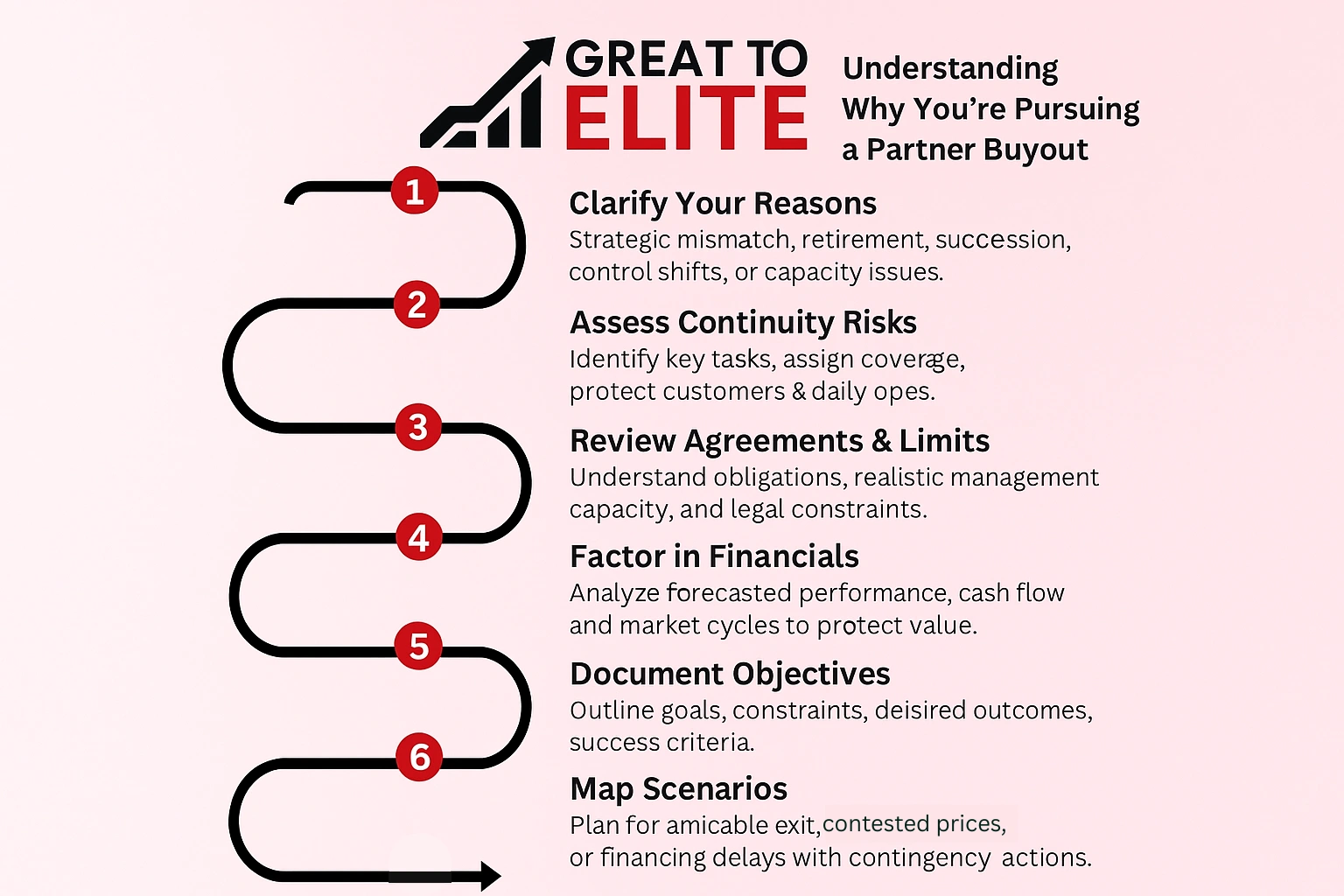
Begin with the documents that set the legal path for separating ownership when you plan to buy out a business partner. The written partnership agreement often outlines required steps, valuation methods, and dispute resolution rules that shape every move. Reviewing these documents ensures you understand obligations, approvals, and restrictions before making offers, transferring accounts, or executing the buyout, whether the goal is to buy a company outright or assume full control of your existing business.
Locate the buy-sell clauses, transfer restrictions, and dispute resolution language. Many agreements tie valuation to formulas or require an independent appraisal. Arbitration clauses can bind the parties to an expert price, so note any forced process.
Bring counsel in at the start. An attorney or lawyer interprets tricky terms and limits risk. Each side should retain separate counsel so offers and releases are documented clearly.
A defensible number rests on disciplined analysis and transparent assumptions. Choose methods that fit your company model and records. Clear steps reduce disagreement and support any buyout negotiation.
Compare market comps, earnings multiples, and discounted cash flow (DCF) results to triangulate fair value. Each method highlights different risks: comparables show market appetite, multiples reflect current earnings, and DCF tests future cash assumptions.
Commission an independent appraisal to anchor talks and document your target price. When parties need a decisive path, consider a multi-appraisal average or the two-envelopes sealed-bid approach for neutrality.
Adjust book value for working capital, hidden liabilities, and non-operating items. Normalize earnings for owner compensation and one-time items so reported figures match economic reality.
Quick Checklist
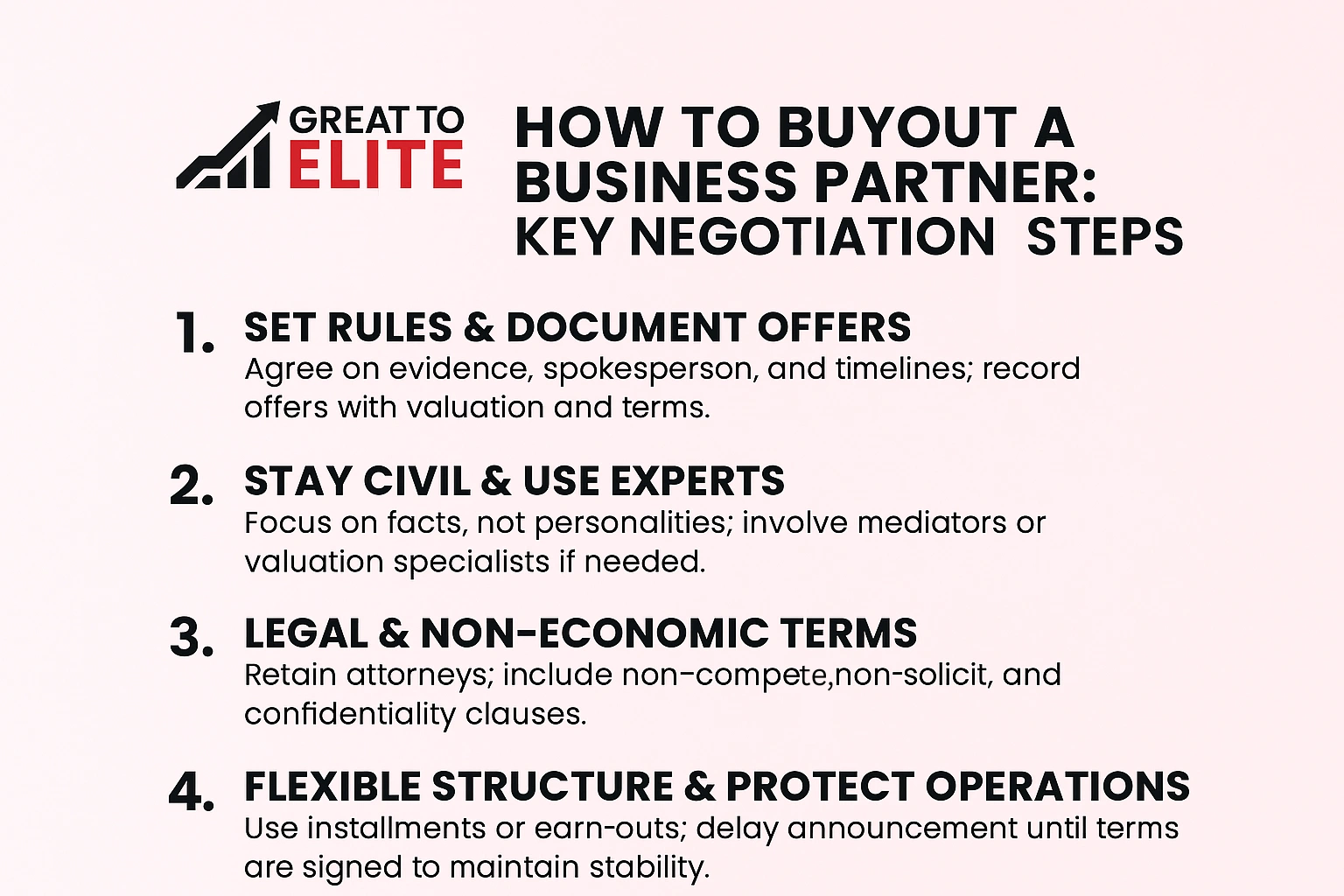
Set clear rules and keep talks civil. Agree what counts as evidence and who speaks for the company. Use a written timeline for decision points and delivery milestones.
Present a documented offer that lists the valuation method, key assumptions, and proposed terms. Keep a running log of revisions so every party can track changes.
Focus on facts, not personalities. That approach lowers cost and prevents positions from hardening. When emotions rise, refer back to annual valuation baselines and written metrics.
Use neutral experts, valuation specialists or mediators, when talks stall. They preserve momentum and lend credibility to contested figures.
Choosing the right capital mix can make the difference between a smooth transition and strained operations. Financing a buyout rarely raises revenue immediately, so match funding to cash flow and risk. Sequence diligence early; lenders and investors expect forecasts, integration plans, and clear collateral.
Consider SBA-backed term loans or traditional bank credit for lower rates and longer amortization.
Non-bank cash-flow lenders may work for recurring revenue firms that lack heavy assets.
Seller notes, staged payments, or earn-outs narrow valuation gaps and preserve working capital.
These structures align incentives and can reduce the upfront money you need.
Bring in equity or mezzanine capital when debt would strain coverage ratios. That trades dilution for breathing room.
Revenue-based financing fits predictable sales models and avoids fixed amortization.
Tap retained earnings or personal capital when prudent, and check tax impacts with your advisor.
If the exit follows death or disability, life or disability insurance proceeds often fund the sale under prearranged terms.
Finish the deal with precise documents and a clear hand-off plan so operations remain steady. This final phase turns settlement terms into binding obligations and practical steps that keep daily work uninterrupted.
Convert the term sheet into definitive agreement documents that state structure, representations, warranties, and closing conditions. Include non-compete, non-solicitation, and confidentiality clauses with specific timelines and remedies.
Make sure state law governs the agreement and that remedies match enforceability in your jurisdiction. Coordinate review with outside counsel so both lawyer and attorney teams sign consistent papers.
Build a closing checklist that covers releases of personal guarantees, assignment of contracts, lien payoffs, and regulatory filings. Update bank accounts, insurance, payroll, benefits, and vendor systems to reflect new ownership and authority.
Communicate a single message to employees, customers, and suppliers that stresses continuity. Execute an operational transition plan for sales pipelines, key accounts, financial controls, and IT access. Schedule post-close check-ins to verify obligations are met and resolve issues quickly.
Great to Elite helps firms plan exits that protect revenue and keep staff focused during change.
You get an end-to-end plan that blends clear agreements, proven valuation methods, and neutral experts. That reduces disputes and keeps operations steady.
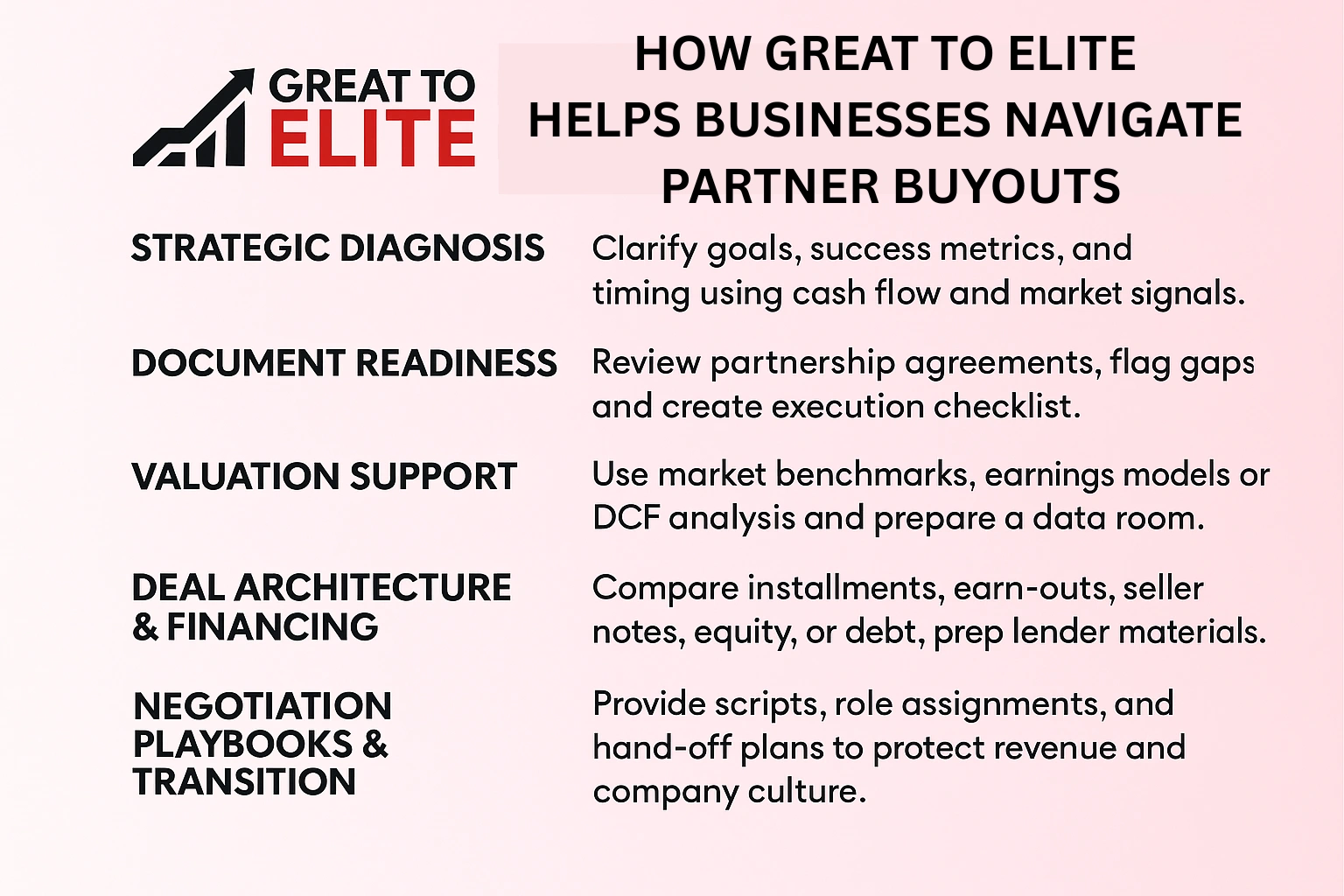
Ready to navigate a partner buyout with confidence? Visit Great to Elite and book a call for a tailored plan for your company’s transition.
Funding gaps and unclear agreements are the most common causes of forced sales. Prepare your valuation and set a realistic price, then document the agreed terms so each party understands the transaction and resulting ownership changes.
Keep negotiations fact-based and use neutral experts when needed. Align your partnership agreement with payment structure, non-compete terms, and how interest, assets, and normalized earnings affect value. Choose capital sources the company can sustain and stress test downside scenarios before signing.
Close cleanly with defined roles, clear communications, and a 90-day integration checklist to stabilize the transition. If you want guidance, Great to Elite can help build the framework and counsel you through the process.