Buying a Turnkey Business: A Complete Guide
Buying a Turnkey Business: A Complete Guide

Natalie Luneva
December 10, 2025




Buying a turnkey business means stepping into an operation that’s already built, tested, and producing revenue. No long setup, no months of trial and error, just a ready-to-run business with systems, accounts, customers, and workflows already in place. In this guide, you’ll learn exactly how these businesses work, what a complete turnkey package should include, and how to evaluate whether the seller’s claims match reality. We break down the full acquisition process, sourcing, valuation, LOI, due diligence, funding, and handover, so you can move quickly, avoid costly mistakes, and start operating on day one with confidence.
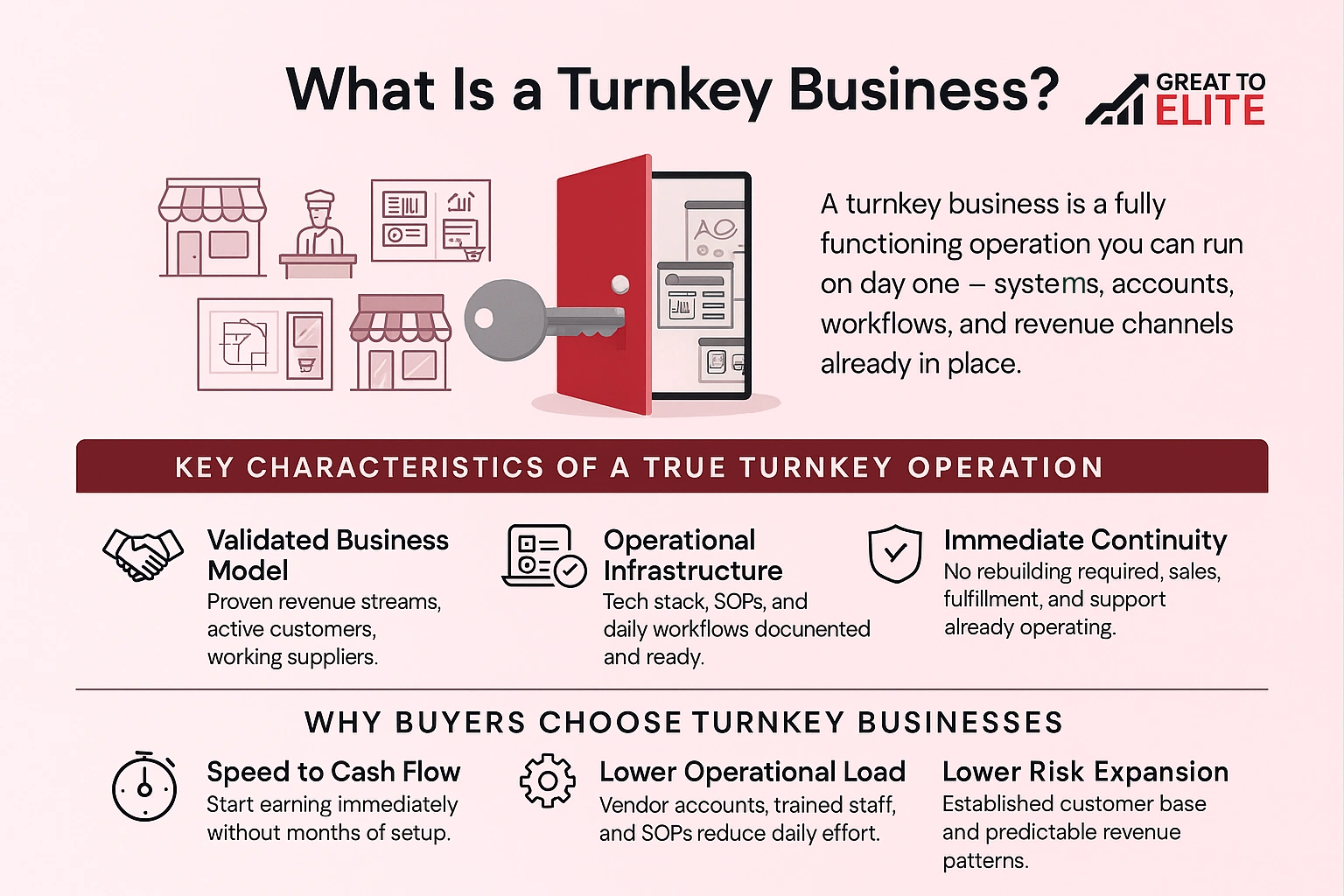
A turnkey business means you receive a fully functioning enterprise with systems, accounts, and documented workflows so you can begin operations immediately. The core test is simple: you should be able to unlock the door, physical or virtual, and run without rebuilding broken systems. In 2024, there were 9,546 closed small-business acquisitions in the U.S., a 5% increase over 2023.
Look for a validated business model, working tech stacks, and clear SOPs. Supplier relationships, active sales channels, and trained staff or contractors should be in place. These elements keep revenue steady and reduce the operational load you inherit.
Real-world opportunities span online and offline models. Examples include content sites, SaaS, ecommerce and FBA, plus restaurants, construction, and real estate projects. Not every offer is highly profitable at sale, but it must not require rebuilding from scratch.
When speed matters, acquiring an established operation cuts months from your runway. You move past setup tasks and begin focusing on revenue, not systems.
Skipping the startup phase often means you can earn cash sooner. That immediate flow suits buyers who need quicker returns and less upfront time investment.
Inherited SOPs, vendor accounts, and trained staff reduce daily effort. With clear procedures in place, you spend time on growth instead of rebuilding foundations.
If you want to add holdings without full-time oversight, this route fits well. An established customer base and steady revenue make risk easier to manage for owners balancing lifestyle and returns.
Models that let you step into running operations vary widely across digital and physical markets. Each option trades setup time for upfront price and hands-on nuance. Choose by how much technical work, location oversight, and cash flow timing you prefer.
Online businesses often include domains, content libraries, email lists, social accounts, and SOPs for marketing and fulfillment.
Look for supplier and 3PL contracts, PPC history, trademarks, and codebase access for SaaS or apps. These items make handover smoother and speed time to revenue.
Physical offerings can include restaurants with fit-outs, rent-ready properties with tenants, and construction projects delivered under fixed scope and timeline.
These cases save build-out time but require location vetting and operational oversight tied to local regulations.
Franchise and label options let you adopt proven products or systems. Contracts often cover supply, margins, and branding rights. Evaluate margin structure and how much control you keep after sale.
A true purchase hands you operational control and the credentials you need to start day one. In practice, that means full account access, clear playbooks, and contacts to keep revenue steady through transition.
You should receive domain and hosting credentials, backend dashboards, content libraries, creative files, and analytics access. Give yourself time to confirm logins and permissions before transfer.
Standard operating procedures must cover critical workflows: customer service, fulfillment, marketing, and tech maintenance. These SOPs let you replicate daily tasks with minimal guesswork.
Expect employee and freelancer agreements, supplier and 3PL contracts, and any licensing documents needed for continuity. For ecommerce or FBA models, include channel account access, PPC data, reorder points, and inventory reports.
Confirm trademarks or brand registrations when relevant to protect ownership and customer trust.
Ongoing seller support via scheduled calls, email, or video is often the most undervalued asset. Agree on a support window, milestones, and deliverables up front.
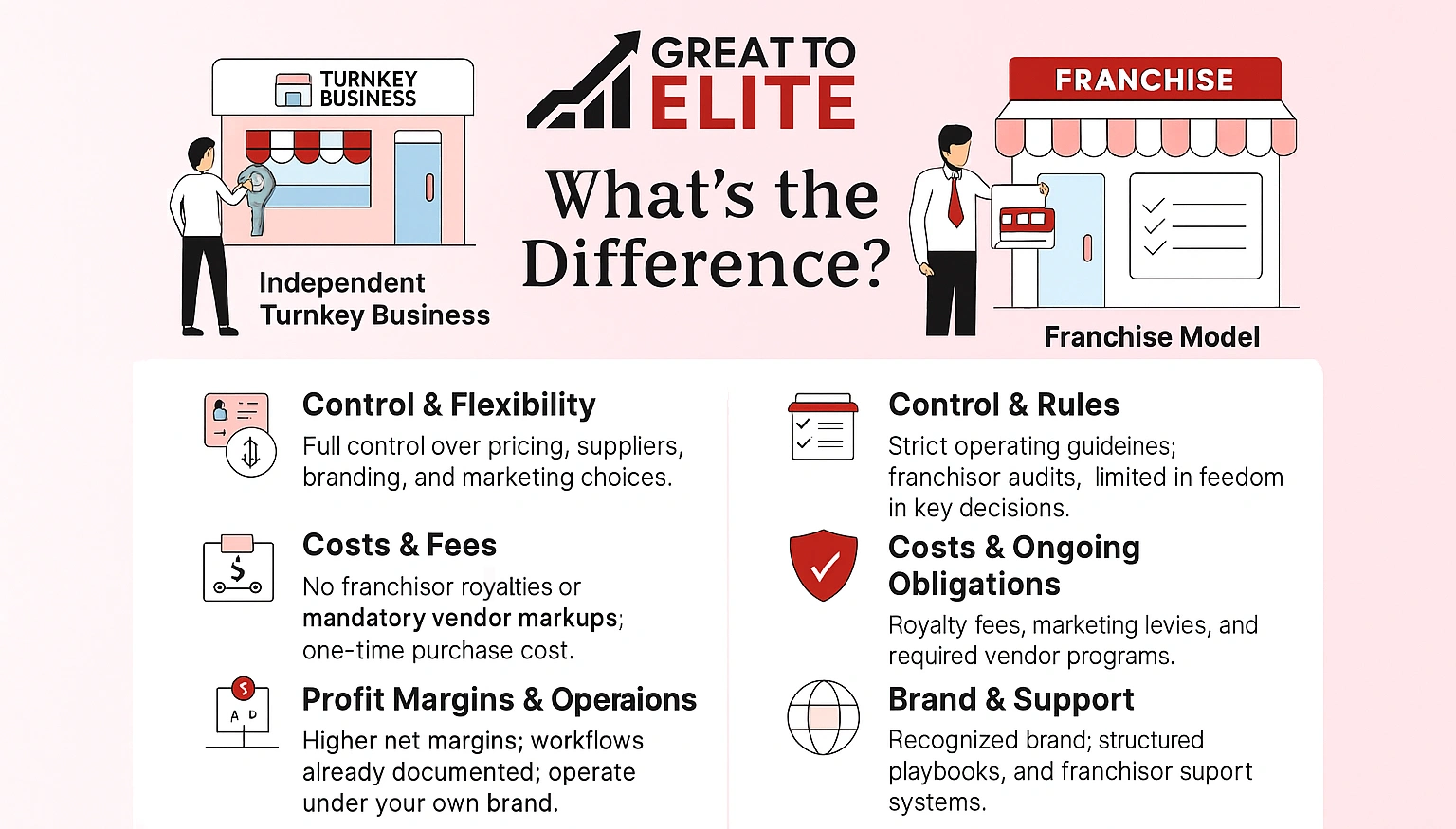
Choosing the right route means balancing freedom, fees, and how you want to run operations. Both options let you start with proven systems, but they differ in control and ongoing costs.
Franchises often include upfront setup and ongoing royalties, plus strict operating rules. You gain brand recognition but accept franchisor audits and compliance terms.
Independent turnkey purchases let you operate under your own or an acquired brand without franchisor fees. That gives you full say over suppliers, pricing, and marketing.
Independent ownership typically delivers higher net margins because there are no royalties or mandatory vendor markups. You keep more revenue and build equity directly.
Franchised models reduce brand risk and offer playbooks, which can suit operators who want structure over autonomy.
Begin with a focused search that matches your budget, skills, and desired involvement. Scan broker marketplaces and private listings to build a shortlist of suitable opportunities. Filter by revenue, location (if relevant), and required time to operate.
Use brokers, niche marketplaces, and targeted outreach to owners. Prioritize listings that include account access, SOPs, and clear financials.
Shortlist three to five targets and request preliminary docs before deeper review.
Normalize earnings, compare industry multiples, and adjust for working capital and inventory needs. Shape offers that include transition support and reasonable contingencies.
Draft an LOI that identifies buyer and seller, states the purchase price, and notes any real estate. Include financing contingencies, exclusivity periods, conduct provisions, access to information, and closing costs.
Verify financials, bank records, tax returns, contracts, IP, licenses, payroll, supplier terms, insurance, litigation, and environmental items. Confirm inventory counts and data access before closing.
Compare term loans, SBA options, personal loans, and owner-financed structures. Consider timing, cost of capital, and how each choice affects cash flow and owner risk.
Plan credential transfers, account ownership changes, training sessions, inventory reconciliation, and SOP handoffs. Set milestones: LOI, diligence window, financing approval, final walkthrough, and closing date.
Assessing risk early saves you money and prevents surprise repairs after closing. Start with clear financials and a short list of red flags. That prevents overpaying for mature assets with hidden problems.
Look for missing bank statements, inconsistent revenue entries, or unexplained one-time gains. Those gaps make forecasting impossible.
Check brand signals: poor online reviews, negative press, or low social engagement can mean reputation repair costs. Watch customer metrics, falling repeat rates or shrinking customer base are warning signs.
Validate demand and examine diversified traffic and sales channels. Reliable repeat purchase rates and steady subscription churn support durable cash flow.
Analyze historical P&Ls, seasonality patterns, and working capital needs. Map how inventory cycles and receivable timing affect cash and flow timing.
Inspect contracts for auto-renewals, punitive termination clauses, and sole-source supplier clauses that create single points of failure.
Pressure-test suppliers: request on-time delivery rates, quality records, and contingency plans. Confirm SOPs for logistics and quality control.
Start your search and decide whether you prefer listed offerings or private outreach; each path shapes workload and control. You can search terms like “turnkey business for sale” to surface brokered marketplaces and private listings.
Brokered marketplaces often pre-vet listings, verify financials, and centralize documentation. That reduces legwork and speeds review.
Advantages: standardized listings, negotiated migration support, and easier data-room access. Brokers usually handle seller outreach and manage initial questions.
Private sourcing via referrals, targeted outreach, or your network gives you more control over terms and timing. You must manage diligence, negotiation, and migration yourself.
Expect sellers to prefer paying broker fees, but always perform independent verification. Request logins, bank statements, and inventory reports directly and confirm claims with third-party checks.
Track each opportunity and compare fit to your experience base and customer-focus skills. If you need help narrowing options, consider getting advice from Great to Elite for selection and transfer planning.
Great to Elite streamlines the acquisition process so you can focus on growth instead of paperwork. You get tailored help across sourcing, valuation, LOI drafting, diligence, funding, and migration.
We specialize in service-led deals and online business transitions. Our team vets listings and surfaces turnkey business opportunities that match your skills and risk profile.
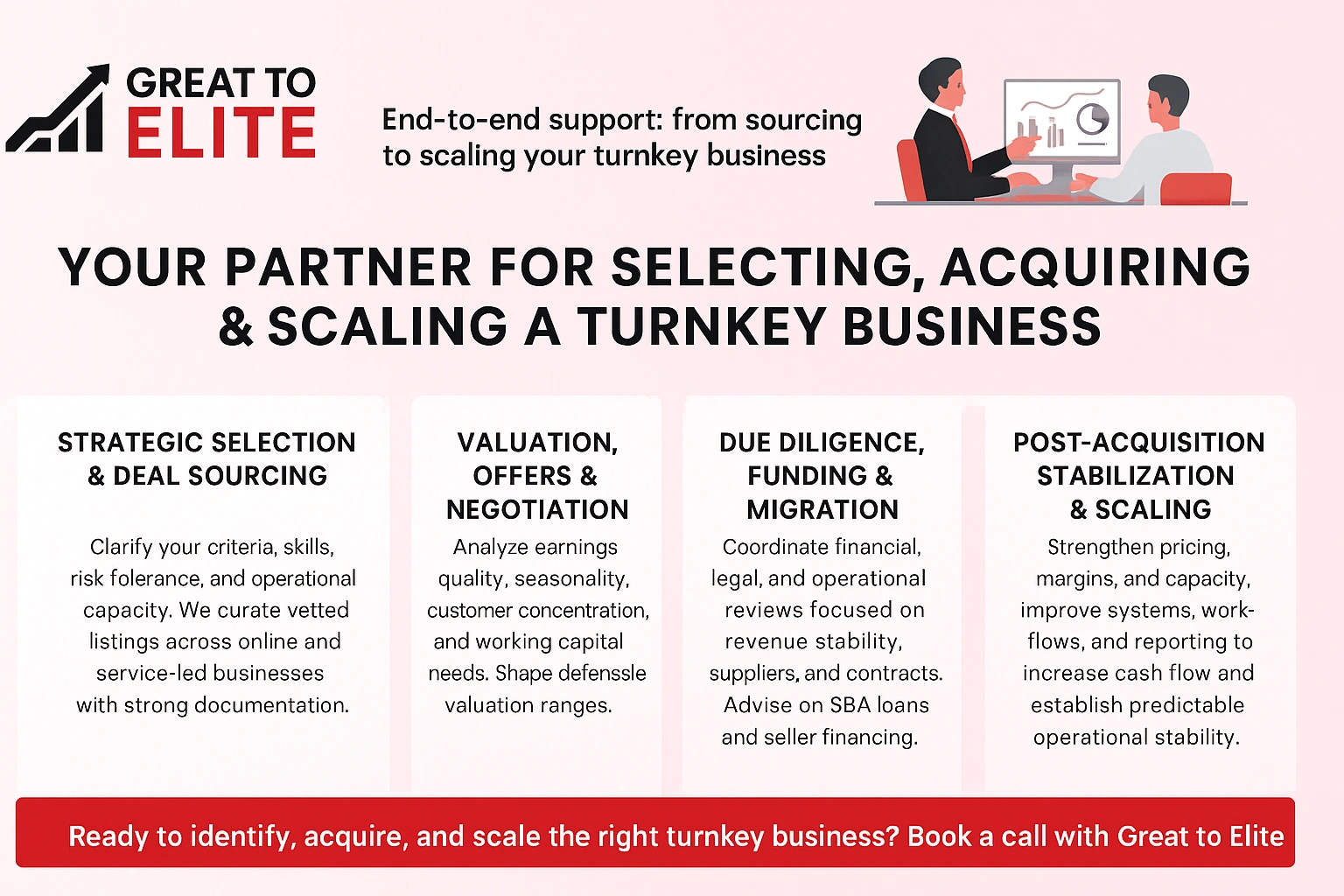
If you want a partner to identify, acquire, and scale the right turnkey business with confident support, book a call with Great to Elite today.
Wrap up your review and map risk, timeline, and the support needed to run day one well.
You now have a clear view of how a turnkey business works and which models fit your goals. Use the LOI and due diligence lists to structure any purchase and protect your position.
The right fit saves you time and helps you start operating on day one. Validate financials, contracts, customer trends, and supplier resilience before you sign.
If you want expert guidance to move from interest to closing with confidence, connect with Great to Elite. Book a call and take the next step toward owning and scaling this kind of opportunity.